
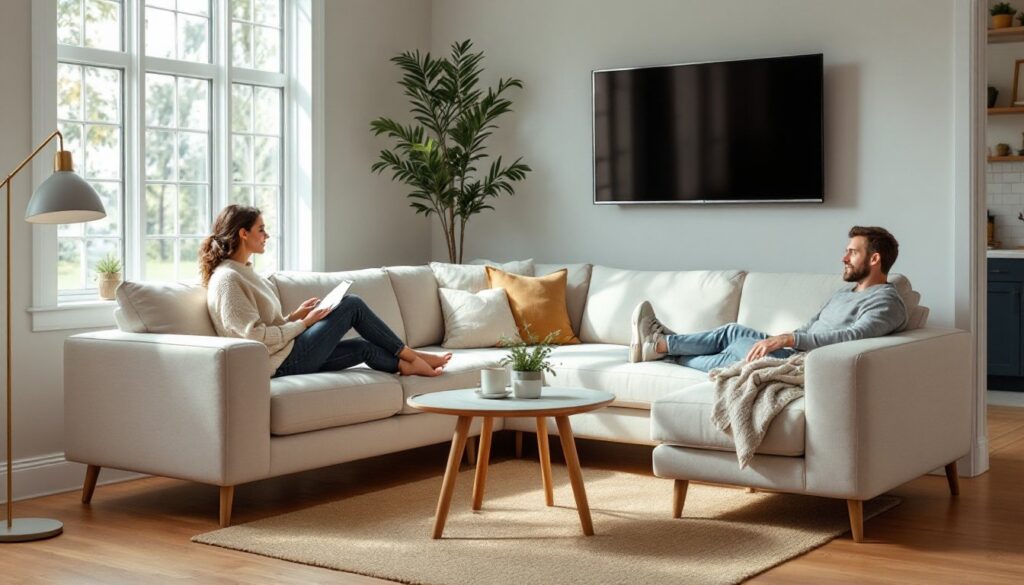
Small living rooms don’t have to mean sacrificing comfort or seating capacity. A well-chosen corner sectional sofa transforms dead corner space into the most functional zone in the room, offering more seating than a standard sofa while actually freeing up floor area. The key is understanding how these L-shaped pieces work with compact dimensions, and avoiding the oversized mistakes that make tight rooms feel cramped. This guide walks through everything from measuring clearances to picking materials that won’t overwhelm a small footprint, helping homeowners make smart decisions before delivery day arrives.
Key Takeaways
- A corner sectional sofa maximizes seating capacity in small spaces by transforming unused corner areas into functional zones while improving traffic flow and visual breathing room.
- Measure your space before purchasing—corner sectionals should be 75 to 85 inches per leg, with compact seat depths around 20 inches and clearances of at least 18 inches from coffee tables and 30–36 inches from walkways.
- Light colors, exposed legs, low-profile backs under 30 inches, and armless designs make corner sectionals feel less visually imposing in tight rooms.
- Reversible and modular configurations provide flexibility for rearranging or relocating, while multi-functional features like under-seat storage and sleeper sections add value in space-constrained homes.
- Always use painter’s tape to outline the exact dimensions on your floor before buying and verify that door and hallway measurements accommodate the sectional pieces during delivery.
- Prioritize function over style—ensure the corner sectional doesn’t force awkward traffic patterns, block natural light, or overwhelm the room’s proportions.
Why Corner Sectional Sofas Are Perfect for Small Living Spaces
Corner sectionals exploit geometry that traditional sofas waste. By wrapping two perpendicular walls, they turn awkward corner zones, areas often relegated to floor lamps or fiddle-leaf figs, into high-value seating. A typical 80″ x 80″ L-shaped sectional offers seating for four to five people while consuming less linear wall space than a sofa-plus-loveseat combo that seats fewer.
The L-configuration naturally divides a room into zones without requiring bulky room dividers. In studio apartments or open-plan layouts, the sectional’s back creates a subtle boundary between living and dining areas. This built-in spatial definition is especially useful in rentals where permanent walls aren’t an option.
Traffic flow improves, too. Instead of forcing a walkway behind a sofa pulled away from the wall, corner sectionals hug two walls and leave the center of the room open. That matters in spaces where every 18 inches of clearance counts. Homeowners dealing with narrow doorways or tight hallways also appreciate that most sectionals ship in two or three separate pieces, easier to maneuver than a single 90-inch sofa.
Key Features to Look for in a Small Space Corner Sectional
Not all corner sectionals are created equal. Small-space shoppers need to scrutinize dimensions and features that bigger rooms can ignore.
Size and Configuration Options
Measure the room before browsing. A sectional that looks compact online can dominate a 12′ x 14′ living room in person. Start with overall footprint: most small-space sectionals range from 75″ to 85″ per leg. Anything approaching 90 inches requires a room at least 14 feet on the shorter wall to maintain walkable clearance.
Pay attention to seat depth. Standard depth runs 22 to 24 inches, but compact models clock in around 20 inches, enough for comfortable sitting without jutting into pathways. Check arm width, too. Track arms and low-profile styles add only 4 to 6 inches per side, while rolled or English arms can steal 8 to 10 inches of usable seat width.
Reversible or modular configurations offer flexibility. A sectional with a reversible chaise (the long, reclining seat) can be flipped to fit left or right orientations, crucial when moving or rearranging. Some modular designs let owners reconfigure the layout entirely, splitting into a sofa and ottoman or rearranging into a different L-shape.
Armless designs maximize seating in the smallest footprints. Removing one or both arms can recover 12 to 16 inches without sacrificing structural integrity, though comfort takes a slight hit for end-seat users.
Storage and Multi-Functionality
In small spaces, furniture must multitask. Corner sectionals with under-seat storage add cubbies for blankets, board games, or seasonal items, valuable when closet space runs short. Lift-top chaise sections are common: they function like an ottoman with hidden storage underneath.
Sleeper sectionals convert into guest beds, eliminating the need for a separate pullout sofa. Look for models with memory foam or innerspring mattresses (not just cushion-thin pads) if the sleeper will see regular use. Be aware that sleeper mechanisms add weight and bulk: these sectionals are harder to move and may require more clearance in front for the bed extension.
Built-in USB ports and power outlets are increasingly standard. While not essential, they reduce cord clutter and the need for side tables in ultra-tight layouts.
Best Placement Strategies for Corner Sectionals in Tight Rooms
Placement makes or breaks small-space sectionals. The default assumption, shoving the sectional into the farthest corner, isn’t always optimal.
Start by identifying the room’s focal point: TV, fireplace, or window with a view. The sectional’s longer leg should face that focal point, with the chaise angled away from the main entry. This keeps sightlines open and prevents the chaise from blocking doorways or foot traffic.
Maintain at least 18 inches of clearance between the sectional’s front edge and a coffee table, and 30 to 36 inches between furniture and walkways. In rooms where that’s not possible, skip the coffee table entirely or use a narrow console behind the sofa instead.
Float the sectional if the room allows it, pulling it a few inches off the walls creates visual breathing room and makes the space feel less packed. This works best in rooms at least 13 feet wide. For tighter spaces, push the sectional flush against walls to maximize usable floor area.
Avoid placing sectionals under low windows. The seatback will block natural light and make the room feel cave-like. If windows are the only option, choose a sectional with a low-profile back (under 30 inches) or position it so the shorter leg sits beneath the window.
In studios or multipurpose rooms, angle the sectional to create a room divider effect. Position the back toward the dining or workspace area, using the sectional’s form to suggest separate zones without walls.
Top Design Styles and Materials for Compact Corner Sectionals
Material and style choices affect how large a sectional feels, not just how it looks.
Light-colored upholstery visually recedes, making the sectional feel less imposing. Soft grays, taupes, and oatmeal tones are practical and forgiving with stains. Dark colors anchor a room but can overwhelm small spaces unless balanced with lighter walls and rugs.
Microfiber and performance fabrics (like Crypton or Sunbrella) hold up to daily use and clean easily, critical in homes with kids or pets. Linen and cotton blends offer a relaxed aesthetic but stain more readily and may require professional cleaning. Leather and faux leather are durable and wipe clean, though they can feel sticky in humid climates and may crack over time with lower-quality options.
Leg style matters more than most shoppers realize. Exposed legs in wood or metal lift the sectional off the floor, creating visual lightness and making floor cleaning easier. Skirted or fully upholstered bases make sectionals look heavier and trap dust underneath. Tapered or angled legs (mid-century modern style) enhance the airy effect.
Low-back and armless silhouettes reduce visual bulk. A sectional with a 30-inch seatback height won’t block sightlines the way a 36-inch tufted model does. Streamlined, track-arm designs in Scandinavian or minimalist styles keep profiles slim.
Avoid oversized tufting, nailhead trim, and bulky rolled arms in small spaces. These details add visual weight and inches to the overall footprint. Save ornate styles for larger rooms where they won’t dominate.
Common Mistakes to Avoid When Choosing a Corner Sectional
The wrong sectional doesn’t just look bad, it makes a small space functionally worse.
Skipping the tape test is the top mistake. Before buying, use painter’s tape to outline the sectional’s exact dimensions on the floor, including clearance zones. Walk around it. Sit in a chair where the sectional would be. If it feels tight with tape, it’ll feel claustrophobic with furniture.
Ignoring doorway and hallway dimensions leads to delivery-day disasters. Measure door widths, hallway turns, and stairwell clearances. Most sectionals disassemble into two or three pieces, but some chaise sections are one solid unit. A 40-inch chaise won’t navigate a 32-inch apartment hallway, even on an angle.
Overestimating seating needs results in too much sofa for the space. A family of two doesn’t need a six-seat sectional. Right-sizing leaves room for side tables, lamps, and breathing space. Remember that chaise sections offer lounging for one, they don’t add multiple seats.
Choosing style over scale is tempting but counterproductive. A deep, plush sectional might be comfortable, but if it forces awkward traffic patterns or blocks windows, it’s the wrong piece. Function dictates form in small spaces.
Neglecting the room’s architecture creates visual clashes. Corner sectionals placed against angled walls or under sloped ceilings create dead space and look forced. Ensure the room has two perpendicular walls with adequate length, otherwise, a standard sofa is the better choice.
Finally, forgetting about future moves is a long-term mistake. If there’s any chance of relocating, prioritize modular or reversible configurations. A sectional that fits this apartment’s corner perfectly might be useless in the next place.