
GreenPan cookware has earned a reputation for its ceramic non-stick coating and eco-friendly manufacturing process. But when it comes to cleanup, many home cooks wonder: can green pans go in the dishwasher, or will that convenient shortcut damage the surface? The answer isn’t as straightforward as a simple yes or no. While GreenPan does label most of its cookware as dishwasher safe, the reality is that repeated dishwasher cycles can shorten the lifespan of the non-stick coating. Understanding how to care for these pans properly will keep them performing like new for years and protect the investment made in quality cookware.
Key Takeaways
- GreenPan cookware is technically dishwasher safe but hand washing is recommended to preserve the ceramic non-stick coating and extend the pan’s lifespan.
- The ceramic Thermolon coating can be damaged by harsh dishwasher detergents, high-pressure jets, and prolonged heat exposure, which gradually roughens the surface and reduces non-stick performance over time.
- Hand washing green pans takes just two minutes and involves cool-down time, mild soap with warm water, and immediate drying to prevent mineral buildup and maintain optimal performance.
- Low to medium heat, minimal oil, silicone utensils, and proper storage with protective cloth between pans are key practices that preserve the non-stick properties and durability of GreenPan cookware.
- Avoid cooking sprays, metal utensils, and storing acidic foods in the pan, as these practices can degrade the coating; seasonal pan seasoning with vegetable oil helps rejuvenate the surface.
What Are GreenPan Cookware and Their Non-Stick Coating?
GreenPan revolutionized the cookware industry by introducing Thermolon™, a ceramic non-stick coating that contains no PFAS, PFOA, lead, or cadmium. Unlike traditional Teflon coatings that rely on synthetic polymers, Thermolon is derived from sand and applied through a process that produces up to 60% less CO₂ during manufacturing.
The ceramic coating creates a slick surface using silicon dioxide (SiO₂) as its primary component. When properly cured, this creates a hard, glass-like layer that prevents food from sticking. The coating is applied to an aluminum or hard-anodized aluminum base, which provides excellent heat distribution while keeping the pan lightweight.
Different GreenPan lines feature variations of this technology. The Valencia Pro and Reserve collections use reinforced Thermolon coatings with diamond particles for increased durability, while budget-friendly lines like the Essentials series stick with standard Thermolon. All versions share the same basic chemistry, but the reinforced coatings can handle more abuse, though that doesn’t mean dishwashers won’t affect them over time.
The coating thickness typically ranges from 30 to 50 microns, which is thin enough to maintain excellent heat transfer but thick enough to provide solid non-stick performance when new. Understanding this construction helps explain why certain cleaning methods work better than others.
Official GreenPan Dishwasher Safety Guidelines
According to GreenPan’s official care instructions, most of their cookware is technically dishwasher safe. The company states that the Thermolon coating can withstand dishwasher detergents and the heat of a typical wash cycle without immediate damage. This applies to their standard lines as well as premium collections.
But, GreenPan’s own documentation includes an important caveat: they recommend hand washing to preserve the non-stick properties and appearance of the cookware. The fine print matters here. “Dishwasher safe” doesn’t mean “dishwasher recommended.” It means the pan won’t warp or have the coating peel off after a few cycles, but it says nothing about long-term performance.
For handles and exterior finishes, the guidance varies by collection. Stainless steel handles are fully dishwasher safe, but wood or silicone-wrapped handles should be kept out of the dishwasher as they can dry out, crack, or loosen over time. The exterior coating, especially on colored pans, may fade or develop a chalky appearance after repeated dishwasher exposure.
Some older GreenPan models or specific lines may carry different recommendations, so checking the documentation that came with the specific cookware set is important. When in doubt, the care tag attached to new pans provides model-specific guidance. If that’s long gone, hand washing remains the safest bet for maintaining warranty coverage and optimal performance.
Why Hand Washing Is Better for Your Green Pans
The difference between what a pan can survive and what keeps it working at peak performance is significant. While greenpan cookware dishwasher safe labels provide peace of mind for occasional use, regular dishwasher cycles expose the cookware to conditions that gradually degrade non-stick performance.
Harsh detergents used in automatic dishwashers contain alkaline compounds, bleach alternatives, and enzymes designed to break down baked-on food. These chemicals are far more aggressive than standard dish soap. Over dozens of cycles, they can microscopically roughen the ceramic surface, reducing its slickness. The pan still works, but eggs start sticking where they didn’t before.
The high heat of the drying cycle also plays a role. While Thermolon can withstand cooking temperatures up to 450°F (or 600°F on some premium lines), the combination of heat, moisture, and chemical exposure in an enclosed dishwasher creates conditions that accelerate coating degradation. Think of it like leaving lumber outside versus storing it in a shed, both technically work, but one preserves the material better.
Another issue: water spots and mineral deposits. Hard water leaves behind calcium and magnesium that bake onto the pan’s surface during the drying cycle. These deposits create a filmy layer that interferes with the non-stick coating’s performance. Hand drying immediately after washing prevents this buildup.
How Dishwashers Affect Ceramic Non-Stick Surfaces
Ceramic coatings bond to the metal substrate through a sol-gel process that creates a molecular connection. This bond is strong, but the surface itself remains vulnerable to abrasion and chemical etching. In a dishwasher, pans often contact other items, the tines of the rack, other cookware, utensils, creating micro-scratches that accumulate over time.
Dishwasher detergent pods and powders often contain sodium carbonate and sodium percarbonate, which have pH levels between 10 and 11. Ceramic coatings are relatively stable at these levels, but repeated exposure gradually breaks down the surface’s smoothness. Compare this to hand washing with a pH-neutral dish soap (pH 7-8), which cleans effectively without chemical aggression.
The spray jets in dishwashers also concentrate detergent and water at high pressure on certain spots, particularly the pan’s center. This focused cleaning power can wear down the coating unevenly, creating areas where food starts to stick while other parts of the pan still perform well.
Finally, the steam environment inside a dishwasher traps moisture around the pan for 60-90 minutes per cycle. While the Thermolon coating itself is non-porous, any microscopic imperfections or existing wear spots can allow moisture and detergent to penetrate slightly, weakening the coating’s adhesion to the base metal over many cycles.
Best Practices for Cleaning Green Pans by Hand
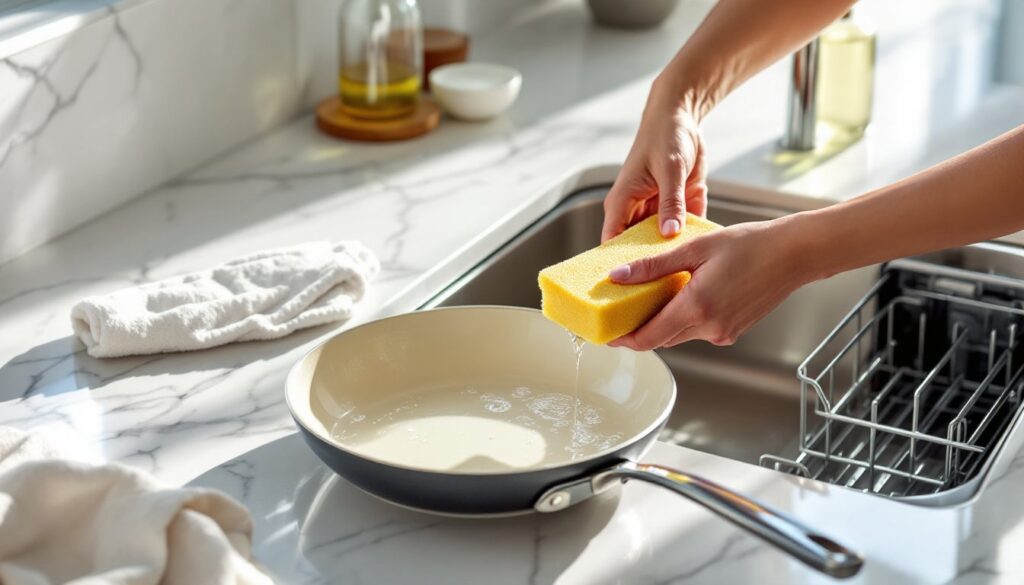
Hand washing GreenPan cookware takes less than two minutes and dramatically extends its usable life. Here’s the method that works best:
Let the pan cool completely before washing. Plunging a hot pan into cold water causes thermal shock, which can warp the aluminum base or create stress fractures in the coating. Set it on a trivet or cooling rack for 5-10 minutes after cooking.
Use warm water and a few drops of mild dish soap. Standard brands like Dawn or Seventh Generation work fine, no need for specialty cleaners. A soft sponge or dishcloth is all that’s needed for routine cleaning. The non-stick surface releases food easily when undamaged, so scrubbing shouldn’t be necessary.
For stuck-on food, fill the pan with warm water and add a tablespoon of baking soda. Let it sit for 15-20 minutes, then use a non-abrasive sponge to wipe away residue. Avoid steel wool, abrasive scrub pads, or scouring powders, these will scratch the coating permanently.
If there’s a stubborn spot, make a paste with baking soda and water (3:1 ratio) and gently rub it on the affected area using a soft cloth. The mild abrasive action of baking soda is enough to remove carbonized food without damaging the ceramic surface.
Dry immediately with a soft towel. Air drying allows water spots to form, especially in areas with hard water. Taking 30 seconds to hand dry prevents mineral buildup and keeps the pan looking new.
For discoloration or a cloudy film that develops over time, a mixture of equal parts white vinegar and water can restore clarity. Warm the solution in the pan over low heat for 2-3 minutes, let cool, then wash normally. The mild acid dissolves mineral deposits without harming the coating.
How to Extend the Lifespan of Your GreenPan Cookware
Proper cleaning is just one piece of the longevity puzzle. How the pans are used day-to-day matters just as much:
Use low to medium heat for most cooking tasks. Ceramic coatings perform best between 250°F and 400°F. Cranking the burner to high doesn’t make food cook faster, it just damages the coating and can cause food to burn onto the surface.
Add a small amount of oil or butter even though the pan is non-stick. A light coating (about 1/2 teaspoon) enhances browning, improves flavor, and creates an additional barrier that protects the coating from direct contact with acidic foods like tomatoes or citrus.
Avoid cooking sprays like PAM or store-brand aerosols. These products contain lecithin and other additives that build up on non-stick surfaces, creating a sticky residue that’s difficult to remove. Use a silicone brush or paper towel to apply regular cooking oil instead.
Use silicone, wood, or nylon utensils rather than metal. While GreenPan’s coating is more durable than Teflon, metal spatulas and whisks can still scratch the surface over time. Keep a set of heat-resistant silicone tools near the stove for regular use.
Store pans properly to prevent scratching. If stacking is necessary, place a soft cloth, paper towel, or pan protector between each piece. Hanging pans from a pot rack eliminates contact damage entirely and keeps them within easy reach.
Season the pan occasionally to maintain optimal non-stick performance. After thorough cleaning, apply a thin layer of vegetable oil to the cooking surface and heat the pan over medium-low for 2-3 minutes. Let it cool, then wipe out excess oil with a paper towel. This fills in micro-imperfections and rejuvenates the slick surface.
Avoid using the pan to store food, especially acidic dishes. Leaving tomato sauce or lemon-marinated chicken in the pan for hours exposes the coating to prolonged acid contact, which can dull the non-stick properties.
Conclusion
So, is greenpan dishwasher safe? Technically yes, but the better question is whether using the dishwasher makes sense for cookware designed to last. The convenience of tossing pans in the dishwasher comes at the cost of reduced non-stick performance and a shorter overall lifespan. Hand washing takes minimal effort and preserves the coating that makes these pans worth owning in the first place. Treat GreenPan cookware like the tool it is, maintain it properly, and it’ll keep delivering easy-release performance for years.