
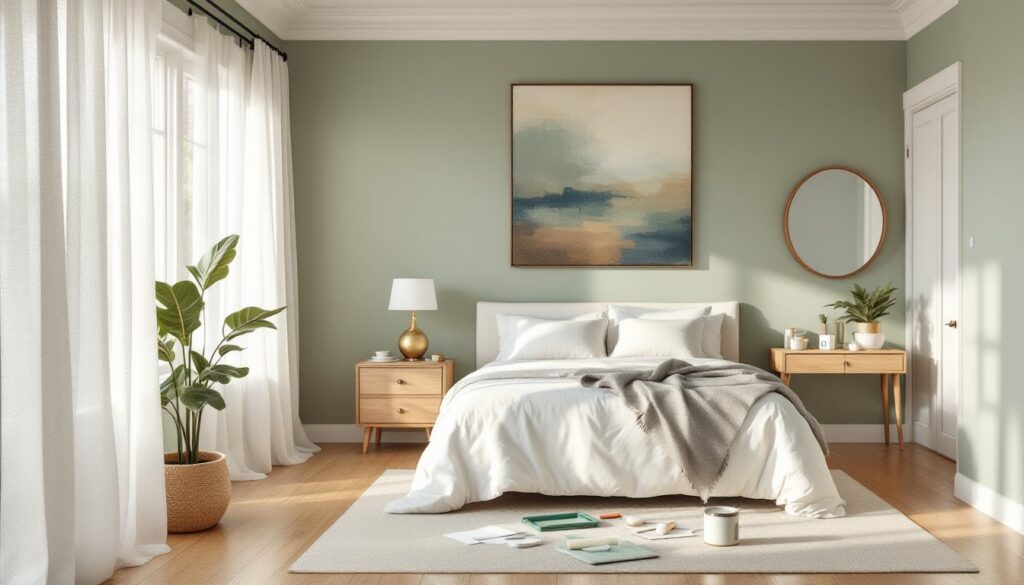
Green has quietly become one of the most requested bedroom colors, and for good reason. It bridges the gap between calming neutrals and personality-rich color, offering everything from whisper-soft sage to dramatic emerald. Unlike trendy accent walls that feel dated in two years, the right green ages well and adapts to shifting decor styles. This guide covers 15 proven shades, explains how green affects sleep quality and mood, and walks through the practical side of choosing and pairing green paint colors for bedrooms, including finish types, lighting concerns, and which undertones work with existing furniture.
Key Takeaways
- Green bedroom paint colors are psychologically calming—mid-tone greens reduce stress and lower heart rate, making them ideal for restful sleep environments.
- Sage green and forest green are the most timeless options: sage works across all design styles and room sizes, while forest green creates dramatic, sophisticated cocooning effects in larger spaces.
- Test paint samples on two walls (one sunny, one shadowed) at different times of day, as green undertones shift significantly between morning light, midday sun, and evening artificial lighting.
- Pair green walls with white or warm white trim, neutral bedding, warm metallics (brass, copper, gold), and natural wood furniture to enhance the calming effect and prevent visual tension.
- Room size and lighting direction matter: use light-to-mid-tone greens in small bedrooms and north-facing rooms, reserve bold forest greens for larger spaces with adequate layered lighting.
- Proper surface preparation with tinted primer and eggshell or satin finishes ensures smooth coverage and longevity, reducing the number of coats needed when transitioning from darker existing colors.
Why Green Is the Perfect Color Choice for Bedrooms
Green ranks among the most psychologically restful colors, sitting between blue’s coolness and yellow’s warmth on the spectrum. Studies on color psychology consistently show that mid-tone greens reduce stress and lower heart rate, making them ideal for spaces designed for sleep and relaxation.
Unlike stark whites that can feel clinical or bold reds that stimulate the nervous system, green creates a grounded atmosphere without sacrificing visual interest. It pairs naturally with wood tones, white trim, and metallic accents, giving homeowners flexibility as decor evolves.
From a practical standpoint, green hides minor wall imperfections better than high-contrast whites or dark charcoals. It also reflects light differently throughout the day, cool greens brighten in morning sun, while warm greens deepen under evening lamps, adding dimension without additional effort.
Green works across design styles. Muted olives suit farmhouse and transitional spaces, while saturated teals fit mid-century modern or maximalist bedrooms. Soft sage complements Scandinavian minimalism, and deep forest greens anchor traditional or moody interiors. That versatility makes green a safer long-term investment than ultra-trendy hues that lose appeal quickly.
One consideration: undertones matter. Greens with blue undertones read cooler and work in sun-drenched rooms, while yellow-based greens add warmth to north-facing bedrooms with limited natural light.
Best Green Paint Colors for a Calming Bedroom Retreat
Choosing from hundreds of green paint shades can overwhelm even experienced DIYers. The following 15 options represent tested colors that perform well in real-world bedroom settings, organized by intensity and undertone.
Soft & Neutral Greens:
- Sherwin-Williams Softened Green (SW 6177): A gray-green hybrid with minimal color saturation. Reads almost neutral in low light, subtle green in daylight. Coverage: ~400 sq ft per gallon at standard application.
- Benjamin Moore Pale Oak (OC-20): Technically a greige, but the green undertone emerges near windows. Pairs with virtually any trim color.
- Behr Celery Bunch (PPU11-8): Affordable big-box option with a slight yellow base. Works in rooms with cool LED lighting.
- Farrow & Ball Vert de Terre (No. 234): A sophisticated gray-green with historical roots. Matte finish hides wall texture.
Mid-Tone Greens:
- Benjamin Moore Saybrook Sage (HC-114): The benchmark sage, warm enough for cozy bedrooms, muted enough to avoid overwhelming small spaces.
- Sherwin-Williams Clary Sage (SW 6178): Slightly grayer than Saybrook Sage, with better performance in rooms with south-facing windows.
- Behr Back to Nature (S380-4): A balanced mid-tone with neither strong warm nor cool undertones. Forgiving in varied lighting.
- Clare Headspace: A direct-to-consumer option with a slight gray cast. Sample pots include primer, simplifying the test process.
Bold & Saturated Greens:
- Benjamin Moore Hunter Green (2041-10): A classic deep green that requires two coats minimum over lighter existing colors. Best on a single accent wall or in larger bedrooms (150+ sq ft).
- Sherwin-Williams Evergreens (SW 9719): A near-black green that adds drama without the harshness of pure black. Use with satin or eggshell finish to prevent a flat, light-absorbing effect.
- Farrow & Ball Studio Green (No. 93): A rich, moody green with blue undertones. Pairs exceptionally well with brass or aged gold hardware.
- Behr Vine Leaf (PPU11-20): A budget-friendly deep green with surprising versatility. Looks sophisticated in matte, modern in semi-gloss.
Blue-Greens & Teals:
- Sherwin-Williams Surf Green (SW 6473): A soft teal that leans green in morning light, blue in evening. Works in coastal and contemporary bedrooms.
- Benjamin Moore Stratton Blue (HC-142): Technically classified as blue, but the green undertone dominates in most lighting. Calming without reading cold.
- Behr Everglade Deck (PPU12-2): A muted teal with gray influence. Less saturated than typical teal, making it easier to live with long-term.
All of these colors require proper surface preparation: patching holes with lightweight spackle, sanding smooth once dry, and priming. Tinted primer matching the final color reduces the number of finish coats needed, especially when transitioning from darker existing colors. Most greens perform best in eggshell or satin finishes, which balance washability with a soft, non-reflective appearance suitable for bedrooms.
Sage Green: The Timeless Neutral
Sage green has dominated bedroom paint trends since 2020 and shows no signs of fading. Its staying power comes from its chameleon-like quality, sage shifts between gray, green, and beige depending on lighting and surrounding colors.
Benjamin Moore Saybrook Sage and Sherwin-Williams Clary Sage represent the gold standard. Both have warm undertones that prevent the cold, institutional feel of hospital-green shades. They pair seamlessly with white trim (use Benjamin Moore Simply White or Sherwin-Williams Pure White for crisp contrast), natural wood furniture, and both warm and cool metal finishes.
For application, sage greens are forgiving but not foolproof. Always test a sample on at least two walls, one that receives direct sunlight and one in shadow. The color will look different on each. Apply two coats minimum for even coverage, especially over existing yellows or pinks, which can bleed through and shift the undertone.
Sage works in rooms of any size but particularly excels in small bedrooms (under 120 sq ft) where darker greens might feel oppressive. Pair with linen bedding in cream or white, and avoid heavy patterns that compete with the subtlety of the color.
Forest Green: Bold and Sophisticated
Forest green has emerged as the go-to choice for homeowners wanting drama without the commitment of black or navy. Deep greens like Benjamin Moore Hunter Green and Sherwin-Williams Evergreens create a cocooning effect, especially effective in bedrooms where the goal is restorative, uninterrupted sleep.
These shades require more planning than lighter greens. Wall condition matters, any imperfection (old anchors, uneven texture, previous patch jobs) will show more prominently in low-reflectance colors. Skim coating with joint compound before priming eliminates most issues. Use a high-quality primer (Zinsser Bulls Eye 1-2-3 or Benjamin Moore Fresh Start) tinted to gray or the final color.
Forest greens perform best with adequate lighting. Install dimmable overhead fixtures and layer in task lighting (bedside lamps, wall sconces) to avoid a cave-like effect. Pair with warm metallics (brass, copper, aged gold) rather than chrome or nickel, which can read cold against deep green.
One caution: dark greens make rooms feel smaller. In bedrooms under 100 sq ft, consider using forest green on a single accent wall behind the bed, with lighter sage or neutral gray on the remaining walls. This preserves the sophisticated look while maintaining a sense of space.
How to Choose the Right Green Shade for Your Bedroom
Selecting green bedroom paint colors involves more than picking a shade from a fan deck. Lighting, room size, existing furniture, and personal sensitivity to color all influence the outcome.
Test Before Committing: Purchase sample pots (8 oz covers roughly 16 sq ft) and paint 2′ x 2′ sections on at least two walls. Observe the color at different times, morning, midday, and evening under artificial light. Greens shift more than neutral grays or beiges, and what looks perfect at noon may feel off at 8 PM.
Consider Natural Light: North-facing bedrooms receive cooler, indirect light, which can make blue-green shades feel cold. Warm greens with yellow or gray undertones (like Behr Celery Bunch or Sherwin-Williams Softened Green) compensate for the lack of warm sunlight. South-facing rooms get intense, warm light that can oversaturate yellow-based greens, opt for cooler sage or teal tones.
Room Size Matters: In bedrooms under 100 sq ft, light to mid-tone greens prevent the space from feeling cramped. Soft sages, muted olives, and gray-greens maintain airiness. In larger bedrooms (150+ sq ft), deeper greens like forest or emerald create intimacy without overwhelming the space.
Undertones and Existing Elements: Pull out samples of existing bedroom elements, bedding, curtains, area rugs, wood furniture. Green paint with strong yellow undertones clashes with cool-toned grays and blues. Blue-greens may look off next to warm oak or cherry wood. Hold paint samples against these items in natural light before buying gallons.
Finish Selection: Bedroom walls perform best in eggshell or satin finishes. Flat/matte finishes hide imperfections but are harder to clean (problematic near light switches or if pets/kids access the room). Semi-gloss is too reflective for most bedroom applications unless used as an accent on trim or one feature wall. High-quality paints like Benjamin Moore Regal Select or Sherwin-Williams Duration Home provide better coverage and durability than budget lines, often requiring one fewer coat.
Pairing Green Bedroom Walls with Furniture and Decor
Green bedroom paint colors shine when paired thoughtfully with furniture, textiles, and decor. The right combinations enhance the calming effect, while poor pairings create visual tension.
Wood Tones: Light woods (oak, maple, pine) pair beautifully with soft sage and mid-tone greens. Dark woods (walnut, mahogany, espresso) complement deeper forest and emerald greens. Avoid pairing yellow-based greens with orange-toned woods like cherry, the combination can feel dated and clash rather than coordinate.
Trim and Molding: Bright white trim (Benjamin Moore Chantilly Lace, Sherwin-Williams Extra White) creates crisp contrast with any green shade. Warm whites (Benjamin Moore White Dove, Sherwin-Williams Alabaster) soften the transition and work better with sage and olive tones. For bold forest greens, consider matching the trim to the wall color for a modern, monochromatic look, using different sheens for subtle definition.
Bedding and Textiles: Neutral bedding in white, cream, beige, or gray lets green walls remain the focal point. If adding color, choose accents from the opposite side of the color wheel, soft blush pinks, warm terracottas, or muted golds. Avoid pairing green walls with bright lime or kelly green textiles unless aiming for a high-energy, non-restful aesthetic. Natural linen and cotton textures complement green’s organic quality better than synthetic, overly shiny fabrics.
Window Treatments: White or cream curtains maintain airiness. For more drama, choose textiles in complementary warm tones (rust, mustard, burnt orange) or deeper shades of the same green family. Blackout linings improve sleep quality without affecting the visible fabric color.
Artwork and Accessories: Brass, gold, and copper frames pop against green walls. Black frames work with deeper greens but can feel stark with sage. Wood frames in walnut or natural oak tie the space together. When selecting artwork, consider pieces with warm neutrals, blues, or earth tones. Avoid art with strong green hues that exactly match the wall, it tends to disappear visually.
Conclusion
Green bedroom paint colors deliver a rare combination of visual interest and psychological calm. From soft sage that adapts to changing decor to bold forest green that anchors a moody retreat, the 15 shades listed here offer proven performance across lighting conditions, room sizes, and design styles. Test samples thoroughly, prep walls properly, and pair thoughtfully with existing furnishings for a bedroom that looks as good in five years as it does the day the paint dries.