
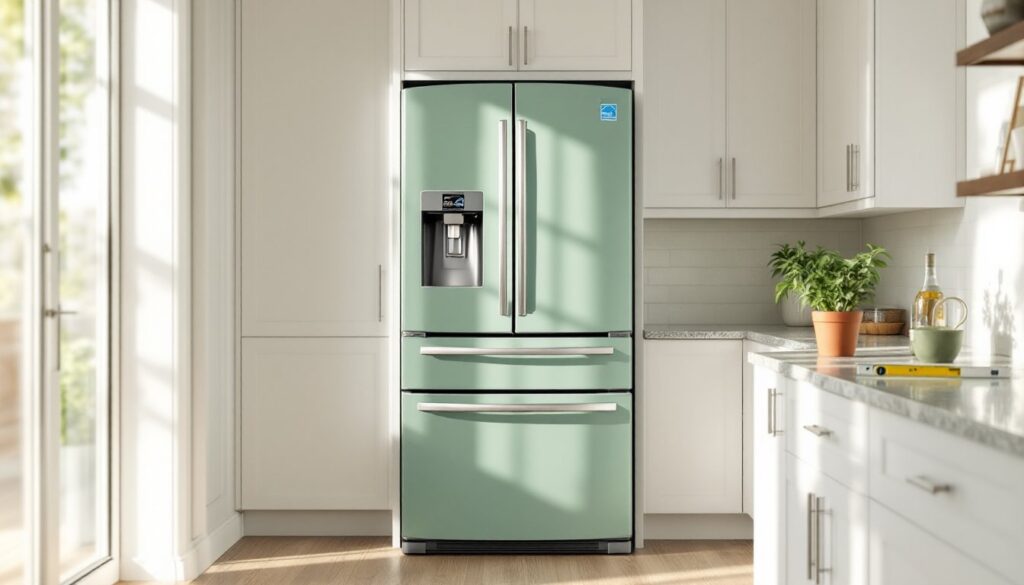
Refrigerators run 24/7, making them one of the biggest energy consumers in any home, accounting for roughly 13% of household electricity use. But today’s green refrigerators flip that script, cutting energy bills while shrinking a homeowner’s carbon footprint. With federal efficiency standards tightening and utility rebates sweetening the deal, choosing an eco-friendly fridge isn’t just good for the planet, it’s a smart financial move. This guide breaks down what makes a refrigerator genuinely green, which features matter most, and how to squeeze every kilowatt-hour of efficiency out of the appliance once it’s installed.
Key Takeaways
- A green refrigerator can save $50–$80 annually on utility bills by using 400–600 kWh per year versus 700+ kWh for older models, totaling $600–$960 over a typical 12-year lifespan.
- Energy Star certification is the gold standard for verification, guaranteeing at least 10% better efficiency than federal minimums, with some top-tier green refrigerators exceeding that by 20% or more.
- Choose refrigerants like R-600a (isobutane) or R-290 (propane) with near-zero global warming potential, avoiding older HFC models that are being phased out under the EPA’s AIM Act.
- Proper placement, maintenance of door seals, and regular condenser coil cleaning can improve efficiency by 5–10%, while setting temperatures to FDA recommendations (37–40°F for fridge, 0°F for freezer) prevents energy waste.
- Federal tax credits, utility rebates of $50–$100, and Energy Star Most Efficient designations make upgrading to a green refrigerator a smart financial investment, not just an environmental choice.
- Advanced features like inverter compressors, vacuum-insulated panels, and LED lighting reduce noise to 38–42 decibels while extending appliance lifespan to 12–15 years through better build quality.
What Makes a Refrigerator “Green”?
A green refrigerator minimizes environmental impact through energy efficiency, sustainable refrigerants, and eco-conscious manufacturing. It’s not just marketing spin, these appliances meet strict performance benchmarks that translate to measurable savings.
Energy efficiency sits at the core. Green models use advanced compressors, improved insulation, and smart defrost cycles to consume significantly less electricity than standard units. The current Energy Star specification requires refrigerators to use at least 10% less energy than the federal minimum standard, with some top-tier models exceeding that by 20% or more.
Refrigerants matter more than most homeowners realize. Older units relied on hydrofluorocarbons (HFCs), potent greenhouse gases with global warming potential thousands of times higher than CO₂. Modern green refrigerators use alternatives like R-600a (isobutane) or R-290 (propane), which have near-zero ozone depletion potential and minimal climate impact. The EPA’s AIM Act is phasing down HFC production, so future-proofing means choosing appliances with next-gen refrigerants now.
Manufacturing practices also play a role, though they’re harder to verify from a spec sheet. Some brands prioritize recycled steel and plastics, water-based foam insulation, and reduced packaging waste. Certifications like GREENGUARD or third-party carbon-neutral pledges offer clues, but they’re not standardized across the industry.
Bottom line: a truly green fridge combines efficient operation, low-impact refrigerants, and responsible production. Everything else is window dressing.
Top Benefits of Choosing a Green Refrigerator
Switching to a green refrigerator delivers tangible advantages beyond feel-good environmentalism. Here’s what homeowners gain:
Lower utility bills top the list. An Energy Star-certified fridge uses about 400–600 kWh per year, compared to 700+ kWh for older, inefficient models. At the national average of $0.16 per kWh (2026 rates), that’s $50–$80 in annual savings. Over a 12-year lifespan, the typical replacement cycle, that’s $600–$960 back in the homeowner’s pocket. Regions with higher electricity costs see even steeper savings.
Utility rebates and tax incentives sweeten the deal further. Many power companies offer $50–$100 rebates for Energy Star appliances, and the federal Energy Efficient Home Improvement Credit (25C) may apply to certain high-efficiency models. Always check the DSIRE database for state and local programs before purchasing.
Quieter operation is a bonus. Green refrigerators often use variable-speed compressors that adjust cooling output instead of cycling on and off at full blast. That means less noise, typically around 38–42 decibels compared to 45+ for older units, making them ideal for open-concept kitchens.
Longer appliance lifespan comes from better build quality. High-efficiency compressors and improved thermal management reduce wear on components. While no fridge lasts forever, green models tend to hit the 12–15 year mark more reliably than budget counterparts.
Reduced environmental footprint matters to buyers who care about climate impact. Choosing a refrigerator with low-GWP refrigerants and lower energy consumption directly cuts greenhouse gas emissions, both from power plant generation and refrigerant leakage at end-of-life disposal.
Key Features to Look for in Eco-Friendly Refrigerators
Not all “green” claims hold up under scrutiny. Focus on these features when shopping:
Energy Star Ratings and Certifications
The Energy Star label remains the gold standard for efficiency verification. It’s backed by EPA testing and guarantees at least 10% better performance than federal minimums. But don’t stop there, check the yellow EnergyGuide label for estimated annual energy use in kWh and operating cost. Compare models within the same size class: a 25-cubic-foot French door will never match the efficiency of an 18-cubic-foot top-freezer, but it should outperform other large-capacity units.
Some manufacturers tout Energy Star Most Efficient designation for top performers. These models often feature inverter compressors, vacuum-insulated panels, and advanced defrost logic that minimizes energy waste.
Look for CEE Tier ratings (Consortium for Energy Efficiency) if available. Tier 2 and Tier 3 models exceed Energy Star by 20–30%, though they’re pricier upfront. Run the payback calculation: divide the price premium by annual savings to see if the extra efficiency pays off within the appliance’s lifespan.
Eco-Friendly Refrigerants and Insulation
Refrigerant type should be non-negotiable. Seek out models using R-600a (isobutane) or R-290 (propane), both hydrocarbons with negligible global warming potential (GWP less than 5). Avoid anything still using R-134a (GWP of 1,430) or older HFCs. The spec sheet or energy label typically lists refrigerant type: if it’s not disclosed, that’s a red flag.
Insulation affects efficiency just as much as the compressor. Older fridges use polyurethane foam blown with HFCs. Green models switch to cyclopentane or hydrocarbon blowing agents, which don’t harm the ozone layer. Some premium units incorporate vacuum-insulated panels (VIPs) in doors and walls, think of them as thermoses for your fridge. VIPs can be 5–10 times more effective than standard foam, allowing thinner walls and more interior space without sacrificing efficiency.
Dual evaporators and separate cooling loops for fridge and freezer compartments prevent odor transfer and allow independent temperature control, reducing compressor runtime. Not every green fridge has this feature, but it’s worth the upgrade if budget allows.
Finally, check for LED lighting, a small detail, but incandescent bulbs waste energy as heat. LEDs also last longer and won’t need replacement mid-lifespan.
How to Maximize Energy Savings with Your Green Refrigerator
Buying a green fridge is half the battle. Proper installation and maintenance unlock the full efficiency potential:
Placement matters. Keep the fridge at least 2 inches away from walls and cabinets so condenser coils can ventilate. Tucking it into a tight alcove or next to an oven forces the compressor to work harder. Avoid direct sunlight and heat sources, every degree of ambient temperature increase raises energy use by roughly 2%.
Level the unit. Use a bubble level and adjust the front feet so the fridge tilts slightly backward (about 1/4 inch). This ensures doors close properly and seals stay tight, preventing cold air leaks.
Set the right temperatures. The FDA recommends 37–40°F for the fridge and 0°F for the freezer. Every degree colder than necessary wastes energy, dropping the fridge to 32°F can increase consumption by 5%. Use an appliance thermometer to verify: built-in displays aren’t always accurate.
Maintain door seals. Test gaskets by closing the door on a dollar bill. If it pulls out easily, the seal is worn and leaking cold air. Replacement gaskets cost $50–$150 and can be DIY-installed with a screwdriver and some patience. Clean seals every few months with warm soapy water to prevent grime buildup.
Clean condenser coils at least twice a year. Dust and pet hair act as insulation, forcing the compressor to run longer. Coils are usually behind a toe-kick grille (front-access) or on the back panel. Unplug the unit, vacuum with a brush attachment, then wipe with a damp cloth. This simple task can improve efficiency by 5–10%.
Keep it full, but not packed. Refrigerators run more efficiently with thermal mass, food and drinks that hold cold. But blocking air vents disrupts circulation and creates warm spots. Aim for about 75% capacity.
Minimize door openings. Each time the door opens, the fridge loses cold air and humidity, triggering the compressor. Teach kids to grab what they need quickly, and consider a secondary beverage fridge in the garage for frequently accessed drinks.
Defrost manual-defrost freezers regularly. If the model isn’t frost-free, ice buildup thicker than 1/4 inch reduces efficiency. Plan defrosting when food stocks are low to minimize waste.
Conclusion
Green refrigerators aren’t a compromise, they deliver superior performance, lower operating costs, and measurable environmental benefits. Prioritize Energy Star certification, low-GWP refrigerants, and proven efficiency features like inverter compressors and quality insulation. Once installed, proper placement and basic maintenance keep the unit running at peak efficiency for years. The upfront investment pays off in utility savings, rebates, and the satisfaction of cutting household energy waste where it matters most.