
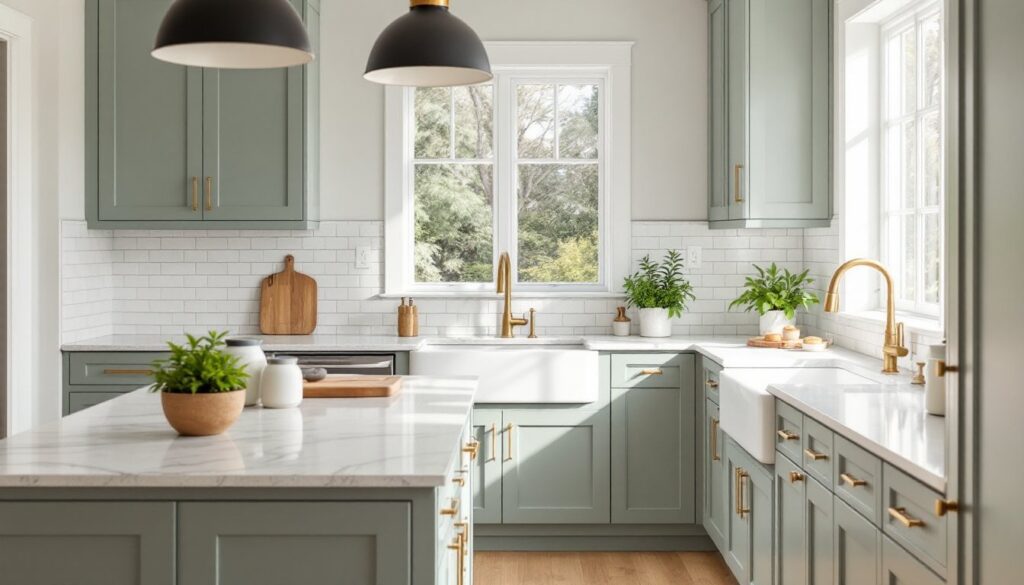
Sage green cabinets have become one of the most sought-after choices for homeowners looking to refresh their kitchens without committing to stark neutrals or bold primaries. This muted, earthy hue brings warmth and sophistication while staying versatile enough to work across design styles, from farmhouse to contemporary. Unlike trendy colors that fade fast, sage green has staying power rooted in nature-inspired palettes that feel both current and timeless. Whether renovating a dated kitchen or building new, choosing kitchen sage green cabinets opens up a world of pairing options for countertops, backsplashes, hardware, and wall colors that can transform the space into something truly distinctive.
Key Takeaways
- Sage green cabinets offer a timeless, versatile choice that works across design styles—from farmhouse to contemporary—without the risk of trendy colors fading quickly.
- Pair kitchen sage green cabinets with warm whites, soft grays, or natural materials like wood and stone to create a cohesive and sophisticated look.
- Sage green hides minor wear and fingerprints better than white or light gray, making it practical for busy households that want a forgiving, low-maintenance finish.
- In small kitchens, use sage green on lower cabinets only with light countertops and under-cabinet lighting to prevent the space from feeling closed in.
- Warm metallics like unlacquered brass and champagne bronze hardware elevate sage green cabinets into a more luxurious aesthetic that complements the color’s natural undertones.
- Sage green adapts beautifully to north and south-facing kitchens—warmer sage tones suit cool northern light, while grayer variations work well in sunny south-facing spaces.
Why Sage Green Cabinets Are the Perfect Choice for Modern Kitchens
Sage green hits a sweet spot: it’s colorful without overwhelming a space, and neutral enough to anchor a kitchen for years. The undertones, gray, blue, or yellow depending on the specific shade, allow it to adapt to different lighting conditions. North-facing kitchens with cooler light benefit from warmer sage tones, while south-facing spaces can handle grayer variations without feeling cold.
From a practical standpoint, sage green hides minor wear better than white or light gray cabinets. Fingerprints, watermarks, and the inevitable scuffs from daily use blend into the color rather than standing out. For busy households, this translates to less frequent touch-ups and a more forgiving finish.
The color also plays well with natural materials, wood floors, stone counters, rattan accents, which is why it’s become a staple in kitchens that lean into organic, biophilic design. Sage green doesn’t compete with these textures: it enhances them. And because it reads as a muted neutral in many contexts, it won’t limit future decor changes the way a bold turquoise or deep navy might.
Best Color Palettes to Pair with Sage Green Cabinets
Pairing sage green cabinets with the right wall and trim colors can either amplify the green’s warmth or cool it down, depending on the desired effect.
Warm whites and creams are go-to choices for walls. Shades like Benjamin Moore Swiss Coffee or Sherwin-Williams Alabaster provide contrast without stark coldness. These off-whites have enough warmth to keep the kitchen from feeling clinical, especially under LED lighting.
Soft grays work when aiming for a more contemporary or transitional look. A gray with slight green or blue undertones, like Sherwin-Williams Repose Gray, harmonizes with sage without clashing. Avoid cool grays with purple undertones: they’ll make the green look muddy.
Terracotta, rust, and warm blush tones bring an unexpected richness. These colors show up in textiles, artwork, or small appliances and create a complementary palette rooted in natural, earthy tones. Think terracotta canisters, rust-colored bar stools, or blush linen dish towels.
Navy or charcoal accents add contrast and depth. A navy island paired with sage perimeter cabinets creates visual interest without requiring a full two-tone commitment. Use charcoal in hardware, light fixtures, or open shelving brackets to ground the palette.
Brass, gold, and warm metallics elevate sage green into a more luxurious zone. The warm metal tones enhance the yellow or gray undertones in sage, making the whole kitchen feel cohesive and intentional.
Countertop and Backsplash Options That Complement Sage Green
Choosing countertops and backsplashes that work with sage green cabinets depends on whether the goal is contrast, continuity, or something in between.
Countertop Materials
White or light gray quartz is the most reliable choice. It’s low-maintenance, non-porous, and provides a clean backdrop that lets the cabinets stand out. Look for slabs with subtle gray or taupe veining, pure white can feel too stark against sage.
Butcher block or light wood counters bring warmth and texture. Species like maple, birch, or white oak pair naturally with sage green, especially in farmhouse or Scandinavian-inspired kitchens. Keep in mind that wood requires regular oiling and isn’t ideal near sinks unless properly sealed.
Black or dark granite and soapstone offer high contrast. This works best in larger kitchens where the dark surface won’t shrink the visual space. Leathered or honed finishes feel more modern than polished.
Marble or quartzite with warm veining (gold, cream, or taupe) creates an upscale look. Avoid marbles with strong gray or blue veining, they can compete with the green rather than complement it.
Backsplash Ideas
White subway tile is timeless and inexpensive. Use it with dark gray or charcoal grout to add definition without fuss. A 3×6-inch tile in a classic brick pattern never looks dated.
Zellige or handmade tile in white, cream, or soft terracotta brings texture and artisan appeal. The irregular surface catches light differently throughout the day, adding subtle visual interest.
Natural stone like travertine or marble in neutral tones works for a more refined aesthetic. Book-matched marble behind the range creates a statement focal point.
Glass tile in soft green or blue-gray can extend the color palette if the kitchen needs more cohesion. Keep it subtle, overly saturated glass tile can look dated quickly.
Painted drywall or plaster is making a comeback in minimalist kitchens. A waterproof acrylic paint or Roman clay finish in a warm white or soft gray simplifies the look and keeps costs down.
Hardware and Fixtures: Finishing Touches for Your Sage Green Kitchen
Hardware and fixtures are the jewelry of a kitchen. With sage green cabinets, the finish and style of knobs, pulls, faucets, and lighting can shift the whole vibe.
Brass and warm gold finishes are the most popular pairing. Unlacquered brass develops a patina over time, which suits the organic feel of sage green. Brushed brass or champagne bronze offer similar warmth with less maintenance.
Matte black hardware delivers contrast and works well in modern or industrial-leaning kitchens. Pair it with black window frames, black faucets, or black pendant lights for a cohesive look. Avoid shiny black: it can look cheap.
Polished nickel or chrome keeps things crisp and traditional. These work best when the kitchen leans more classic or transitional, especially with white marble counters and subway tile.
Leather pulls or wood knobs bring warmth and a handcrafted feel. These are ideal for Scandinavian, farmhouse, or natural-modern styles. Just ensure the leather is treated for kitchen use, grease and moisture are constant companions here.
Cabinet Hardware Sizing
- Pulls: Use 3-inch to 5-inch pulls on drawers: 5-inch to 6-inch pulls on cabinet doors, or go for 12-inch pulls on wide drawers for a contemporary look.
- Knobs: Stick to 1.25-inch to 1.5-inch diameter knobs for upper cabinets or smaller drawers.
Plumbing Fixtures
Choose a pull-down or pull-out kitchen faucet in a finish that matches the hardware. If going with brass cabinet pulls, a brass or gold faucet ties the space together. Matte finishes hide water spots better than polished.
Design Styles That Work Beautifully with Sage Green Cabinets
Sage green cabinets are style-flexible, but certain design approaches bring out their best qualities.
Modern Farmhouse: Pair sage cabinets with shiplap walls, open wood shelving, apron-front sinks, and wood or marble counters. Add vintage-inspired brass hardware and Edison-bulb pendants. Keep the palette warm and layered.
Scandinavian Minimalism: Use sage green as the sole color accent in an otherwise white and light wood kitchen. Choose flat-panel or slab cabinet doors, integrated handles, and minimal upper cabinets. Add greenery, linen textiles, and simple ceramics.
Transitional: Blend traditional elements (Shaker-style doors, crown molding) with modern touches (quartz counters, sleek hardware, neutral tile). Sage green bridges the gap between classic and contemporary effortlessly.
Mid-Century Modern: Combine sage cabinets with walnut or teak accents, geometric tile, brass fixtures, and period-appropriate lighting like globe or cone pendants. The warm wood tones and clean lines complement the muted green.
English Cottage: Go full traditional with sage lowers, cream or white uppers, marble or butcher block counters, and floral or patterned tile. Incorporate brass bin pulls, plate racks, and vintage textiles for a cozy, collected feel.
Tips for Incorporating Sage Green Cabinets in Small vs. Large Kitchens
Scale matters. Sage green can work in any size kitchen, but the approach differs.
Small Kitchens
In tight spaces, use sage green on lower cabinets only and keep uppers white or light wood. This prevents the room from feeling closed in while still delivering the color impact. If going full sage, maximize natural light, add under-cabinet lighting and use glossy or satin finishes to reflect light.
Choose slab or flat-panel doors to reduce visual clutter. Shaker doors with too much detail can feel busy in a compact kitchen. Limit upper cabinets or replace some with open shelving to create airiness.
Stick to light countertops and backsplashes, white quartz and subway tile are safe bets. Avoid dark counters, which can make a small kitchen feel cave-like.
Large Kitchens
Larger kitchens can handle full sage cabinetry or two-tone schemes. A common layout: sage perimeter cabinets with a contrasting island in navy, charcoal, or natural wood. This breaks up the green and adds architectural interest.
Consider varying cabinet depths and heights, floor-to-ceiling cabinets in sage, a mix of glass-front uppers, or a pantry wall in sage with open shelving elsewhere.
In open-plan homes, repeat sage green in adjacent spaces through furniture, textiles, or accent walls to create flow. A sage green dining bench or living room throw pillows ties the kitchen into the broader space.
Conclusion
Sage green cabinets offer a rare combination: they’re on-trend but not fleeting, colorful but not loud, and versatile across styles and spaces. The key to making them work lies in thoughtful pairings, neutral walls, natural materials, warm metals, and finishes that complement rather than compete. Whether updating a cramped galley kitchen or designing a sprawling open-plan space, sage green cabinets can anchor the design and grow with changing tastes for years to come.