
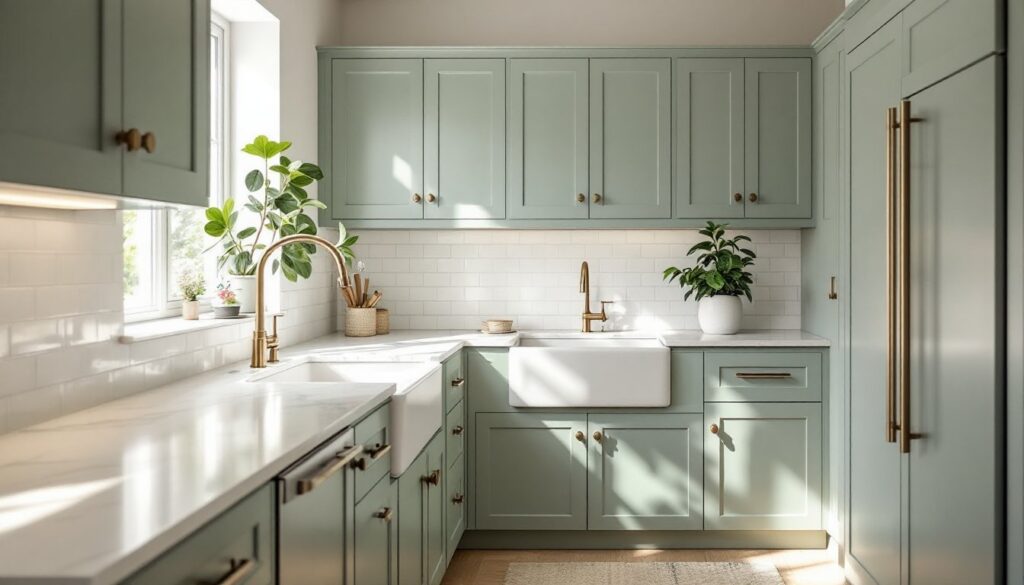
Sage green kitchen cabinets have moved from design blogs into real kitchens, and for good reason. This muted, earthy hue delivers warmth without the heaviness of traditional wood tones and offers versatility that stark white or navy can’t match. Unlike trendy colors that feel dated within a few years, sage green bridges contemporary and classic styles, making it a smart investment for homeowners planning a kitchen remodel. Whether someone’s painting existing cabinets or ordering custom builds, understanding how to work with this color, from choosing the right cabinet style to selecting complementary finishes, turns a good kitchen into one that feels both current and timeless.
Key Takeaways
- Sage green kitchen cabinets bridge contemporary and classic styles, making them a timeless investment that won’t feel dated within a few years.
- Shaker-style and slab-door designs are ideal cabinet styles to pair with sage green, with rail widths of 2¼ to 3 inches providing the best balance.
- Complement sage green cabinets with warm metallics like brass or brushed gold hardware, light wood tones, and whites or creams in countertops and backsplashes.
- Sage green adapts flexibly to different kitchen layouts—use it on islands for subtle color, on lower cabinets only for visual separation, or throughout galley kitchens with proper lighting.
- Proper prep work, including 120-grit sanding, degreasing, and high-adhesion primers, is essential for a professional finish when painting existing cabinets sage green.
Why Sage Green Is the Perfect Choice for Modern Kitchens
Sage green works because it’s grounded in nature but doesn’t scream “rustic farmhouse.” The color sits in a sweet spot, cool enough to feel fresh, warm enough to avoid the sterile look of pure grays or whites. It pairs seamlessly with natural materials like butcher block countertops, quartzite, and brass fixtures, which dominate modern kitchen design.
From a practical standpoint, sage green hides minor wear better than white cabinets. Light scuffs, fingerprints, and the inevitable patina that comes with a working kitchen blend into the color rather than standing out. For families who actually cook, this matters.
The color also adapts to lighting conditions. In north-facing kitchens with cooler light, sage green maintains its softness without turning icy. In south-facing spaces flooded with warm light, it picks up golden undertones that enhance the cozy factor. This flexibility means homeowners don’t need to worry as much about paint samples looking completely different at various times of day, though testing samples is still non-negotiable.
Sage green also plays well with the current move toward biophilic design, which emphasizes natural elements and earth tones. Pairing these cabinets with indoor plants, natural stone, or reclaimed wood reinforces that connection without requiring a full-scale rustic overhaul.
Best Cabinet Styles to Pair with Sage Green
Not all cabinet styles work equally well with sage green. The color shines when paired with profiles that either lean into traditional craftsmanship or strip things down to clean, modern lines.
Shaker-Style Cabinets
Shaker cabinets are the default pairing for sage green, and for good reason. The five-piece door construction, a recessed center panel framed by four rails, provides just enough detail to catch light and shadow without overwhelming the color. The style originated with 18th-century Shaker communities that valued function and simplicity, and that ethos translates well to modern kitchens.
When ordering or building Shaker doors, the rail width matters. A 2¼-inch to 3-inch rail hits the sweet spot for most kitchens. Narrower rails can look flimsy on tall pantry doors: wider ones start to feel heavy and traditional. Sage green softens the lines of Shaker doors, making them feel less country-cottage and more contemporary.
For DIYers painting existing cabinets, Shaker doors take paint well because the flat surfaces are easy to prep and roll. The recessed panel does create an extra edge to cut in with a brush, but it’s manageable for anyone who’s painted trim before.
Flat-Panel and Slab Designs
Slab doors, single-panel construction with no frame or molding, push sage green into fully modern territory. The absence of detail puts all the focus on the color itself and the quality of the finish. That means prep work and paint application need to be flawless. Any streaks, drips, or sanding marks will show.
Slab doors work especially well in high-gloss or matte finishes. A high-gloss sage green reflects light and adds depth, making the color shift slightly depending on the viewing angle. Matte finishes, on the other hand, absorb light and give the cabinets a soft, almost velvety appearance. Both are legitimate choices: the decision depends on whether the homeowner wants the cabinets to act as a statement piece (gloss) or a subtle backdrop (matte).
For frameless (European-style) cabinets, slab doors are the standard. These cabinets eliminate the face frame found on traditional American cabinets, providing more interior storage space and a sleeker exterior. The continuous sage green surface across a full wall of frameless slab cabinets creates a unified, gallery-like effect that suits minimalist and Scandinavian-inspired kitchens.
Complementary Colors and Finishes for Sage Green Cabinets
Sage green is forgiving, but it still benefits from thoughtful pairings. The wrong backsplash or countertop can make the cabinets look muddy or washed out.
White or cream is the safest complementary color. A white quartz countertop with subtle gray veining keeps the palette light and prevents the kitchen from feeling too earthy. Cream-colored subway tile or a 3×6-inch ceramic backsplash in a warm off-white adds texture without competing. True stark white (like pure titanium white paint) can create too much contrast and make the sage green look dull by comparison: instead, look for whites with a hint of warmth, something in the Linen White or Swiss Coffee range.
Natural wood tones bring warmth and texture. Light oak, white oak, or ash floating shelves work well, as do wood-look luxury vinyl plank (LVP) floors in a matte finish. Avoid red-toned woods like cherry or mahogany: they clash with the green and pull the palette in competing directions.
Black accents add structure. A matte black faucet, black window frames, or black metal bar stools provide contrast without heaviness. The key is to use black sparingly, too much can overpower the softness of sage green.
Warm metallics like brass, aged brass, or brushed gold have become the go-to hardware finish for sage green cabinets. The warm tones in the metal echo the yellow undertones in sage, creating a cohesive look. Avoid cool-toned metals like polished chrome or brushed nickel unless the rest of the kitchen leans heavily modern and cool.
For countertops, quartzite or marble with warm veining works beautifully. A slab with gold, cream, or soft gray veins picks up the cabinet color without matching it exactly. Steer clear of stark gray granite or pure black countertops, they can make sage green look sickly.
Hardware and Fixtures That Elevate Sage Green Cabinetry
The right hardware makes or breaks sage green cabinets. Since the color is relatively subtle, the hardware does a lot of the heavy lifting in defining the kitchen’s style.
Brass and gold-tone hardware are the current favorites. Unlacquered brass develops a patina over time, which complements the organic feel of sage green. If that living finish isn’t appealing, brushed brass or satin brass provides the warm tone without the tarnish. For pulls and knobs, look for substantial pieces, thin, delicate hardware gets lost against the cabinet color.
Matte black hardware works if the kitchen has other black elements (light fixtures, faucet, appliances). A cup pull or bar pull in matte black adds a modern edge, but it needs to be balanced with warmth elsewhere in the space, or the room can feel too industrial.
Leather pulls are an unexpected option that adds texture. A cognac or tan leather pull on sage green Shaker cabinets bridges modern and traditional. They’re durable and age well, though they do require occasional conditioning.
For cabinet hinges, use soft-close European hinges whenever possible. They’re standard on new cabinetry and can be retrofitted onto existing cabinets. Hinges should match the hardware finish or be concealed entirely. Exposed hinges in the wrong finish, like shiny chrome on a warm, earthy kitchen, stick out awkwardly.
Faucets and sink fixtures should align with the hardware choice. A brushed gold faucet with a pull-down spray head pairs naturally with brass cabinet hardware. If going with black hardware, a matte black faucet ties it together. Bridge-style faucets with cross handles lean traditional: single-lever designs with clean lines feel more contemporary.
Design Ideas for Different Kitchen Layouts
Sage green adapts to different layouts, but the approach shifts depending on the kitchen’s size and configuration.
In a galley kitchen, sage green cabinets on both walls can make the space feel cozy rather than cramped, assuming there’s good lighting. Add under-cabinet LED strip lights to prevent shadows and keep the color from looking too dark. A lighter countertop and a white or light-toned ceiling maintain brightness.
For an L-shaped or U-shaped kitchen, consider using sage green on the lower cabinets only and pairing it with white, cream, or natural wood upper cabinets. This creates visual separation and prevents the green from overwhelming the space. It also allows for open shelving on the upper section, which lightens the overall look and provides display space for dishes or glassware.
In a kitchen with an island, the island is a natural spot for a bold color choice. If the perimeter cabinets are white or wood-tone, a sage green island introduces color without committing the entire kitchen to it. Conversely, if the perimeter is sage green, a natural walnut or white oak island adds contrast and warmth. The island also offers an opportunity to integrate a contrasting countertop material, say, butcher block on a sage green island paired with white quartz on the perimeter.
Open-concept kitchens benefit from sage green’s neutrality. Since the kitchen is visible from the living or dining area, the color needs to work with the adjacent spaces. Sage green bridges gaps, it plays nicely with gray sofas, wood dining tables, and a variety of paint colors on the walls. Just ensure the undertones align: if the living room has cool grays, choose a sage green with more gray in it: if the space has warm beiges, go for a warmer sage.
For those painting existing cabinets, proper prep is everything. Sand with 120-grit sandpaper, clean thoroughly with a degreaser (TSP or a TSP substitute works), then prime with a high-adhesion bonding primer like Sherwin-Williams Extreme Bond Primer or Zinsser B-I-N. Use a high-quality cabinet paint in either an alkyd enamel or a water-based acrylic-alkyd hybrid. Two thin coats beat one thick coat every time. A foam roller for flat surfaces and a 2-inch angled brush for edges will yield a smooth, professional finish.
Sage green kitchen cabinets offer a rare combination, they’re on-trend but not fleeting, bold but not overwhelming. Whether updating a single wall or overhauling an entire kitchen, the color rewards careful planning and quality execution.