
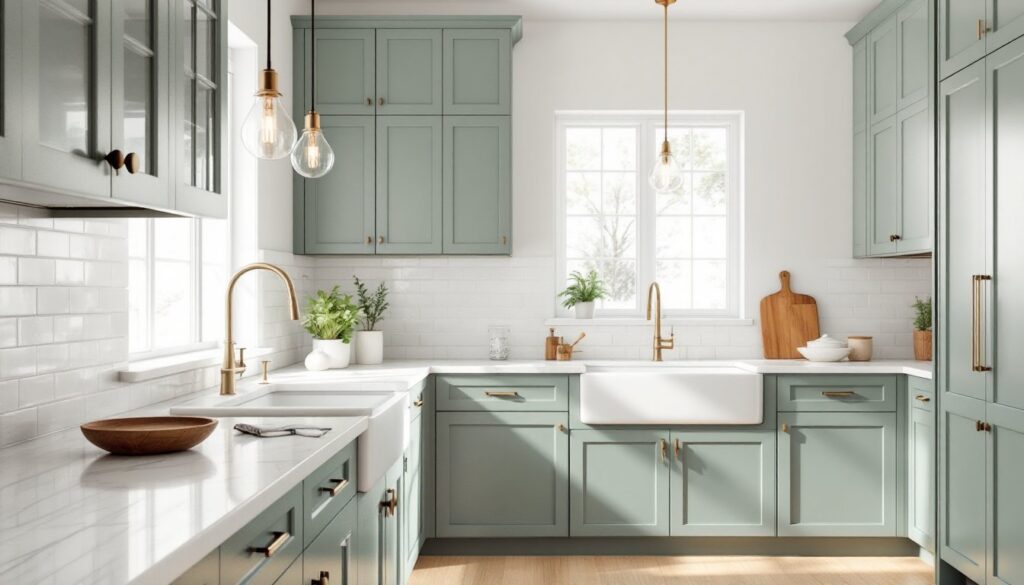
Green kitchen cabinets have surged beyond trend status and into serious staying power. Homeowners are ditching neutral fatigue in favor of versatile, nature-inspired shades that bring character without overwhelming a space. But “green” spans a massive spectrum, from whisper-soft mints to moody, forest-dark hues, and choosing the wrong tone can clash with countertops, clash with lighting, or just feel off. This guide breaks down the best green paint colors for kitchen cabinets in 2026, with a focus on real-world performance, compatibility with finishes, and how each shade holds up after the painter’s tape comes off.
Key Takeaways
- The best green for kitchen cabinets depends on lighting, existing finishes, and contrast tolerance—with sage, hunter, olive, and mint each offering distinct advantages.
- Sage green is the versatile MVP that works across design styles and pairs seamlessly with white tile, quartz counters, and stainless steel appliances without requiring complete kitchen renovation.
- Hunter green delivers drama and sophistication but demands ample lighting, proper surface prep, and high-quality enamel finish to avoid showing imperfections in darker tones.
- Olive green brings warm, earthy vibes ideal for rustic or Mediterranean kitchens and works best with warm wood finishes and antique brass hardware.
- Mint green is perfect for small or dimly lit kitchens as it reflects light effectively, though it requires thorough priming and at least two coats for adequate coverage.
- Paint finish matters as much as color—use bonding primer rated for cabinets, apply satin or semi-gloss enamel in two coats, and test samples on a single door for several days before committing to the full kitchen.
Why Green Kitchen Cabinets Are Taking Over Modern Homes
Green bridges the gap between bold color statements and easy-to-live-with neutrals. Unlike high-commitment reds or yellows, greens, especially muted or earthy tones, work across a range of design styles from farmhouse to contemporary.
From a practical standpoint, green hides minor wear better than stark white or black. Fingerprints, grease splatter, and the inevitable dings from pot handles are less glaring on mid-tone greens. The color also pairs well with natural materials: butcher block counters, brass hardware, marble backsplashes, and wood flooring all complement green without clashing.
Design-wise, green cabinets anchor a kitchen without requiring a full gut renovation. Swap out cabinet doors, repaint existing boxes with a quality bonding primer, and suddenly the room feels fresh. It’s a high-impact change that doesn’t demand new flooring or appliances, which makes it a favorite for budget-conscious DIYers and flippers alike.
Green also plays well with current lighting trends. Warm LED bulbs (2700K–3000K) enhance olive and sage tones, while cooler daylight bulbs bring out the crispness in mint and seafoam shades. That flexibility matters when a kitchen gets morning sun but relies on overhead lighting at night.
Sage Green: The Timeless Favorite for Any Kitchen Style
Sage green remains the MVP of kitchen cabinet colors for a reason: it’s calm, versatile, and ages gracefully. This gray-green hybrid reads as neutral in most lighting but still offers enough pigment to feel intentional. Think of it as the denim of paint colors, works with almost anything.
Sage pairs beautifully with white subway tile, quartz counters in white or light gray, and stainless steel appliances. It also holds its own alongside natural wood tones, making it ideal for kitchens with exposed beams, open shelving, or wood floors. Hardware in brushed nickel, matte black, or antique brass all work without competing.
For a DIY cabinet paint job, sage is forgiving. Slight variations in sheen or minor streaking are less noticeable than they would be on stark white or navy. Use a cabinet-grade acrylic enamel with a satin or semi-gloss finish for durability. Expect to apply two coats over a stain-blocking primer, especially if painting over darker wood or previously painted cabinets.
Sage works in small galley kitchens and sprawling open-concept spaces alike. In compact layouts, it adds color without shrinking the room visually. In larger kitchens, it prevents the sterile, hospital-like feel that all-white schemes can sometimes create. If unsure, sage is the safe bet that still delivers personality.
Hunter Green: Bold Elegance for Statement-Making Kitchens
Hunter green is for homeowners ready to commit. This deep, forest-inspired shade delivers drama and sophistication but demands thoughtful planning. It works best in kitchens with ample natural light or a strong artificial lighting plan, pendant lights over islands, under-cabinet LED strips, and well-placed recessed cans.
Pair hunter green cabinets with marble or quartzite countertops in white, cream, or even black for contrast. Brass or gold hardware adds warmth and prevents the space from feeling too heavy. Avoid pairing hunter green with dark floors or dark walls unless the ceiling height is generous (nine feet or more): otherwise, the room can feel closed in.
From a paint standpoint, dark greens show imperfections more readily than lighter shades. Surface prep is critical. Fill any nicks or dents with wood filler, sand to 220-grit smoothness, and use a high-quality bonding primer. Two coats of a durable enamel in semi-gloss or satin will provide the hard, scrubbable finish needed in a kitchen.
Hunter green leans traditional but can work in modern kitchens when paired with clean lines, minimal hardware, and sleek fixtures. It’s a strong choice for islands when perimeter cabinets remain white or light gray, creating a focal point without overwhelming the space. Just be aware: this is a color that looks very different in samples versus full coverage. Test it on a cabinet door and live with it for a few days before committing to the whole kitchen.
Olive Green: Warm and Earthy for Cozy Kitchen Vibes
Olive green brings warmth and earthiness that sage sometimes lacks. It’s a shade that works especially well in kitchens leaning rustic, Mediterranean, or cottage-inspired. Olive has yellow undertones that play nicely with warm wood finishes, walnut, oak, or reclaimed pine, and terracotta tile or natural stone backsplashes.
This color thrives in kitchens with warm white or cream walls and counters. Pair it with oiled bronze or antique brass hardware to enhance the vintage, lived-in feel. Olive green can feel dated if combined with cool grays or stark white, so stick to warmer neutrals.
For painting, olive’s mid-tone range is fairly forgiving, though it can show brush strokes if the paint isn’t leveled properly. Use a high-quality brush or a foam roller designed for smooth finishes. A satin finish is ideal for olive cabinets, it hides minor flaws better than semi-gloss but still wipes clean.
In smaller kitchens, olive can feel cozy rather than cramped, especially when upper cabinets are lighter or replaced with open shelving. It’s also a good choice for two-tone schemes: olive lowers with white or cream uppers create depth without the stark contrast of black-and-white combos. If the goal is a warm, inviting kitchen that feels like it’s been there for years, olive delivers.
Mint Green: Fresh and Light for Compact Spaces
Mint green is the cheerful, airy option that works wonders in small or dimly lit kitchens. This pastel-leaning shade reflects light well, making compact galley kitchens or basement kitchens feel more open and bright. It’s also a solid pick for retro or vintage-inspired kitchens, think 1950s diner vibes or cottage charm.
Mint pairs best with white countertops (quartz, laminate, or butcher block painted white) and subway or hexagon tile in white or soft gray. Chrome or polished nickel hardware keeps the look crisp and clean. Avoid heavy, dark counters or floors, which can muddy mint’s lightness.
Because mint is a lighter shade, coverage is key. Expect to prime thoroughly, especially over dark wood or bold existing colors, and apply at least two, possibly three coats of cabinet enamel. A semi-gloss finish enhances the fresh, clean aesthetic and is easier to wipe down after cooking.
Mint can feel juvenile if overdone, so balance it with mature finishes. Use open wood shelving, a patterned cement tile floor, or black accents (faucet, range hood, window frames) to ground the sweetness. It’s a shade that works best when treated as a deliberate design choice, not an afterthought. In the right setting, mint green cabinets bring energy and personality without sacrificing function.
How to Choose the Right Green Shade for Your Kitchen
Choosing among green paint colors for kitchen cabinets comes down to three factors: lighting, existing finishes, and how much contrast the space can handle.
Lighting: Test paint samples on cabinet doors or large poster boards placed at different angles in the kitchen. Observe how the color looks in morning light, midday, and under artificial lighting at night. Greens shift dramatically depending on light source and direction.
Existing finishes: Take stock of flooring, counters, and backsplash before committing. If the kitchen has cool-toned grays, stick with sage or mint. Warm wood tones and earthy tile call for olive or hunter. Clashing undertones create visual tension that no amount of styling can fix.
Contrast tolerance: If the kitchen is small or has low ceilings, lighter greens (sage, mint) prevent the space from feeling closed in. Larger kitchens with high ceilings and abundant natural light can handle darker, moodier shades like hunter. For two-tone cabinets, use the darker green on lower cabinets and a lighter neutral on uppers to maintain balance.
Paint finish matters as much as color. Satin finishes hide imperfections but can show wear over time: semi-gloss is more durable and easier to clean but shows brush strokes if application isn’t careful. Always use a bonding primer rated for cabinets, it’s the difference between a paint job that lasts five years and one that chips after six months.
If torn between two shades, paint a single cabinet door in each and live with them for a week. The right green will feel at home quickly: the wrong one will nag.
Conclusion
The best green for kitchen cabinets isn’t a universal answer, it’s the shade that fits the light, complements existing finishes, and matches the homeowner’s tolerance for boldness. Sage offers timeless versatility, hunter brings drama, olive adds warmth, and mint delivers freshness. Test samples, prep surfaces properly, and don’t skip the primer. Green cabinets aren’t a gamble when the assignments’s done upfront.