
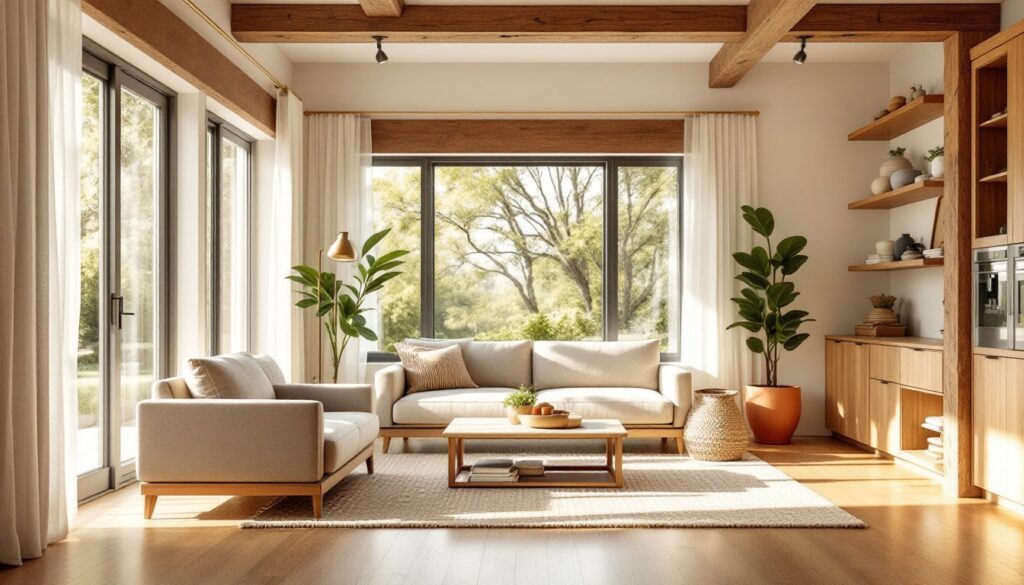
Sustainable interior design isn’t just a trend, it’s a practical response to material waste, indoor air quality concerns, and rising energy costs. Homeowners today want spaces that look good without compromising health or the environment. The good news? Eco-friendly sustainable interior design doesn’t require a complete gut-and-rebuild. With the right materials, thoughtful planning, and a few strategic upgrades, anyone can reduce their home’s environmental footprint while creating rooms that are comfortable, functional, and built to last. This guide walks through the principles, materials, and real-world tactics that make interior design sustainability achievable on a DIY timeline.
Key Takeaways
- Sustainable interior design prioritizes renewable materials, energy efficiency, and indoor air quality to reduce your home’s environmental footprint without requiring a complete renovation.
- Material selection is critical—choose FSC-certified wood, reclaimed materials, zero-VOC paints, and recycled content products verified by third-party certifications like Greenguard and Cradle to Cradle.
- Energy-efficient upgrades like double-pane windows, LED lighting, proper insulation, and strategic natural light design can cut utility costs by 10–50% while improving comfort and resale value.
- Start sustainability improvements by extending the life of existing materials—refinish hardwood floors, paint cabinets, and repair fixtures before replacing them to minimize waste and cost.
- Proper ventilation with exterior-venting exhaust fans and maintained air sealing prevents moisture buildup and removes harmful VOCs, significantly improving indoor air quality and protecting your health.
What Is Sustainable Interior Design?
Sustainable interior design prioritizes materials, methods, and products that minimize environmental impact across a project’s entire lifecycle, from extraction and manufacturing through installation, use, and eventual disposal or reuse. It’s not just about buying bamboo flooring or recycled glass tile. It’s a systems approach that considers energy consumption, indoor air quality, material sourcing, durability, and end-of-life recyclability.
Key components include:
- Material selection: Choosing renewable, reclaimed, or low-impact resources (FSC-certified wood, recycled metal, natural fibers)
- Energy efficiency: Designing spaces that reduce heating, cooling, and lighting loads
- Indoor air quality: Avoiding VOC-heavy paints, adhesives, and finishes that off-gas harmful compounds
- Longevity: Investing in durable materials and timeless design that won’t need replacement every few years
- Local sourcing: Reducing transportation emissions by using regionally available materials when possible
Unlike greenwashing or superficial eco-branding, true eco-friendly interior design requires verifiable certifications (Greenguard, Cradle to Cradle, Energy Star) and transparency about supply chains. Homeowners should ask suppliers for material data sheets and third-party testing results, especially for insulation, flooring, and finishes.
Why Sustainable Interior Design Matters Now More Than Ever
Interior spaces contribute more to a home’s carbon footprint than most people realize. Standard construction materials, drywall, carpet, vinyl flooring, conventional paint, are resource-intensive to produce and often contain chemicals that degrade indoor air quality for years. According to the EPA, indoor air can be two to five times more polluted than outdoor air, largely due to building materials and furnishings.
Beyond health, there’s cost. Energy-inefficient lighting, poor insulation, and heat-leaking windows drive up utility bills month after month. Sustainable materials for interior design often pay for themselves through lower operating costs and longer replacement cycles. A quality hardwood floor can last 50+ years: cheap laminate might need replacing in a decade.
Then there’s waste. The EPA estimates that building-related debris accounts for roughly 600 million tons of waste annually in the U.S. Much of this comes from renovations, ripped-out cabinets, carpet, trim, and tile headed to landfills. Designing with durability and adaptability in mind reduces the frequency and volume of renovation waste.
Finally, building codes and standards are tightening. The 2024 International Energy Conservation Code (IECC) raised efficiency requirements for new construction and major remodels. Homeowners who get ahead of these shifts now will avoid costly retrofits later and increase resale value as buyers prioritize energy performance and healthy materials.
Core Principles of Eco-Friendly Interior Design
Choosing Sustainable Materials and Finishes
Material selection is where interior design sustainability gets concrete. Start with the highest-impact surfaces: flooring, walls, and cabinetry.
Flooring: Look for FSC-certified hardwood, reclaimed wood, cork, natural linoleum (not vinyl), or recycled content tile. Cork and bamboo are rapidly renewable, but verify sourcing, some bamboo products use formaldehyde-based adhesives. For budget-conscious projects, polished concrete is durable, low-maintenance, and works with radiant heat.
Wall finishes: Choose zero-VOC or low-VOC paints (brands like Benjamin Moore Natura, Sherwin-Williams Harmony). For texture, consider clay plaster, lime wash, or recycled paper wallcoverings. Avoid vinyl wallpaper, which off-gasses phthalates.
Cabinetry and millwork: Specify plywood or solid wood with no-added-formaldehyde (NAF) certification instead of standard particleboard or MDF. If budget allows, reclaimed wood for shelving or accent walls adds character and diverts material from landfills.
Insulation: Recycled denim, cellulose (recycled newspaper), or mineral wool outperform fiberglass in both R-value per inch and indoor air quality. They’re also easier to handle without specialized PPE.
Countertops: Recycled glass composite, paperstone (compressed paper and resin), or locally quarried stone beat imported granite or quartz in embodied energy. For DIY installs, consider butcher block from sustainably harvested hardwood, it’s repairable, renewable, and workable with standard tools.
Energy Efficiency and Natural Lighting
Designing for daylight reduces electrical demand and improves occupant well-being. Start by auditing existing windows: are they single-pane? Poorly sealed? Replacing them with double-pane, low-E glass units (U-factor ≤0.30) can cut heat loss by 50% or more. If full replacement isn’t in the budget, add cellular shades or insulated curtains to reduce thermal bridging.
Strategic placement of mirrors and light-colored finishes bounces natural light deeper into rooms. Paint ceilings and upper walls in high-reflectance whites (LRV 85+) to maximize lumens without adding fixtures.
For artificial lighting, LED bulbs are non-negotiable, they use 75% less energy than incandescents and last 15–25 times longer. Install dimmer switches (confirm LED compatibility) to fine-tune output and further reduce consumption. In kitchens and baths, consider task lighting on dedicated switches instead of relying on overhead floods.
Passive solar design is harder to retrofit but worth considering during major remodels. South-facing windows (in the Northern Hemisphere) capture winter sun: deep overhangs or exterior shades block summer heat. Consult local solar path diagrams and consider working with an energy consultant if structural changes are on the table, this work may require stamped plans and permits.
HVAC integration: Seal ductwork with mastic (not cloth duct tape, which degrades) and insulate runs in unconditioned spaces. Even modest air sealing, caulking around windows, outlet gaskets, door sweeps, can improve HVAC efficiency by 10–20%. Use a blower door test to identify leaks if doing a whole-home energy upgrade.
Practical Ways to Implement Sustainable Design in Your Home
Start with what you’re replacing. Don’t rip out functional materials just to go green. Sustainable design means extending the life of what’s already there. Refinish hardwood instead of replacing it. Paint cabinets instead of demo-ing them. Repair and reseal tile grout before committing to a full retile.
Buy secondhand and salvaged. Architectural salvage yards, Habitat for Humanity ReStores, and online marketplaces offer reclaimed doors, hardware, lighting fixtures, and lumber at a fraction of retail. Inspect for lead paint (pre-1978 items) and structural soundness, but quality vintage millwork often exceeds modern manufacturing standards.
Prioritize multi-functional furniture. Built-ins and modular pieces reduce the need for excess furniture and the waste stream that comes with it. A plywood platform bed with integrated storage beats a particleboard frame that’ll sag in three years.
Use natural textiles. Swap synthetic curtains, rugs, and upholstery for organic cotton, linen, wool, or jute. These materials are biodegradable, don’t shed microplastics, and often perform better (wool is naturally flame-retardant and moisture-wicking). Check for GOTS (Global Organic Textile Standard) or OEKO-TEX certifications to avoid pesticide residues and chemical treatments.
Install water-efficient fixtures. WaterSense-labeled faucets and showerheads reduce flow without sacrificing pressure, typically 1.5–2.0 GPM vs. 2.5 GPM standard. Dual-flush or low-flow toilets (1.28 GPF or less) can save thousands of gallons per year. These are straightforward DIY swaps: most install with basic wrenches and plumber’s tape.
Ventilate properly. Good indoor air quality depends on controlled air exchange. Install Energy Recovery Ventilators (ERVs) or Heat Recovery Ventilators (HRVs) if doing major HVAC work, they bring in fresh air while recovering heat or cooling from exhaust. For smaller projects, ensure bathroom and kitchen exhaust fans vent to the exterior (not the attic) and are sized correctly: minimum 50 CFM for bathrooms, 100+ CFM for kitchens. This prevents moisture buildup and removes combustion byproducts and VOCs.
Measure and plan before buying. Overordering materials creates waste. Calculate square footage carefully, add 10% for cuts and waste (15% for tile with complex patterns), and return unused materials promptly. Many retailers accept unopened paint and unopened boxes of flooring.
Common Mistakes to Avoid in Sustainable Interior Design
Greenwashing traps: Not every product labeled “eco” or “natural” is sustainable. Verify third-party certifications, Greenguard Gold, FSC, Cradle to Cradle, Energy Star. Avoid vague claims like “eco-friendly” without backup data.
Ignoring embodied energy: Shipping a exotic hardwood from overseas often negates its renewable benefits. Prioritize local or regional materials when performance is equivalent. A locally milled oak floor beats bamboo shipped 8,000 miles.
Skipping surface prep: Low-VOC paints and finishes perform poorly over dirty, greasy, or improperly primed surfaces. Clean walls with TSP substitute, sand glossy finishes, and use a quality primer. Poor prep leads to early failure and waste.
Over-specifying exotic materials: Rare hardwoods, imported stone, and niche composites drive up cost and carbon. Many sustainable materials for interior design are commodity items, plywood, oriented strand board (OSB), drywall made with recycled gypsum, that perform well and cost less.
Forgetting maintenance: Sustainable doesn’t mean zero-maintenance. Wood floors need periodic refinishing. Natural fiber rugs require regular vacuuming. Plan for upkeep and educate household members on care to maximize lifespan.
Neglecting ventilation during installation: Even low-VOC products release some off-gassing during cure. Open windows, run fans, and avoid occupying freshly finished spaces for 24–72 hours. Wear a respirator with organic vapor cartridges when applying finishes in enclosed areas.
Doing structural work without permits: Energy upgrades that involve moving walls, altering load paths, or changing window sizes typically require permits and inspections. Cutting corners can void insurance, complicate resales, and create safety hazards. When in doubt, consult local building officials before starting demo.