
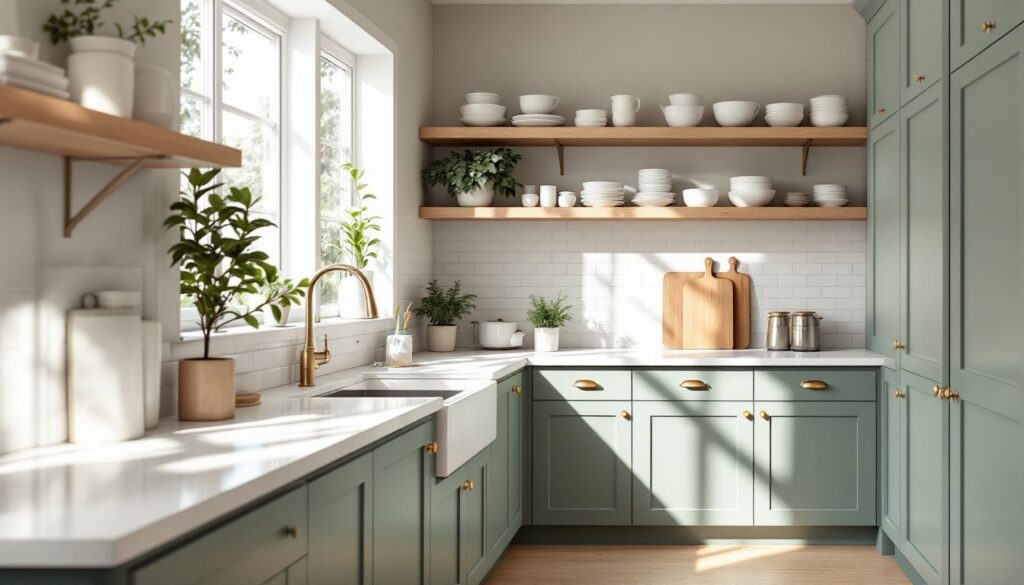
Green cabinets are making a serious comeback in kitchens across the country, and for good reason. Unlike trendy colors that fade from favor in a season or two, green brings a natural, grounding quality that works with everything from farmhouse sinks to stainless steel appliances. It’s bold enough to make a statement but versatile enough to grow with changing tastes. Whether someone’s planning a full remodel or just swapping out cabinet doors, green offers a refresh that doesn’t scream “trend.” It pairs well with warm woods, cool marbles, and nearly every metal finish on the market. This guide covers the practical side: which shades hold up best, what materials complement them, and how to make green work in kitchens of any size or style.
Key Takeaways
- Green cabinets offer a timeless, versatile aesthetic that pairs seamlessly with various design styles and materials without requiring a complete kitchen overhaul.
- Sage green works best for kitchens with limited natural light, while emerald and forest greens need ample lighting and strategic placement to prevent the space from feeling heavy or cave-like.
- Light countertops like white quartz or marble, combined with matte black or brass hardware, create the ideal contrast to complement green cabinet designs.
- Kitchens with green cabinets hide minor wear and fingerprints better than lighter neutrals, making them a practical choice for households with high traffic and active families.
- In small kitchens, lighter green shades paired with white upper cabinets and strategic under-cabinet lighting prevent the space from feeling cramped while maintaining visual interest.
- Green has historical design precedent across colonial, Victorian, and mid-century modern kitchens, ensuring that green cabinet choices remain stylish rather than trendy for years to come.
Why Green Cabinets Are the Perfect Choice for Modern Kitchens
Green sits at the intersection of nature and sophistication, which makes it a smart pick for kitchens that see daily use. Unlike stark white or gray, green doesn’t show every fingerprint or grease spatter as harshly, especially in matte or satin finishes. It also brings warmth without skewing too yellow or orange, a common issue with beiges and tans.
From a design standpoint, green is remarkably adaptable. It complements both warm and cool palettes, meaning homeowners won’t need to overhaul countertops, backsplashes, or flooring to make it work. Sage, olive, and hunter greens anchor a space without overwhelming it, while brighter tones like mint or seafoam can energize smaller kitchens or breakfast nooks.
Green also ages well. Unlike some bold colors that feel dated within a few years, green has historical precedent, colonial kitchens, Victorian-era cabinetry, and mid-century modern spaces all featured green in various forms. That longevity means a kitchen with green cabinets is less likely to feel locked into a specific decade.
One practical benefit: green hides minor wear better than lighter neutrals. Small dings, scratches, and discoloration blend into deeper greens more easily than they do with white or cream. For households with kids, pets, or heavy kitchen traffic, that durability matters.
Popular Shades of Green for Kitchen Cabinets
Sage Green: Soft and Sophisticated
Sage green is the workhorse of the green family, subtle enough to feel neutral but distinct enough to add character. It’s a gray-green blend that leans cooler, making it a natural partner for white subway tile, marble countertops, and brushed nickel hardware. Sage works particularly well in kitchens with limited natural light, as it doesn’t absorb brightness the way darker greens do.
When selecting a sage paint or stain, test samples in both morning and evening light. Some sages shift blue under certain bulbs, while others pull more taupe. For painted cabinets, a satin or eggshell finish is ideal, matte can look flat on large surfaces, and high-gloss shows every imperfection.
Sage pairs cleanly with butcher block countertops, white oak flooring, and warm brass fixtures. It’s also forgiving during installation: slight variations in paint application are less noticeable than with stark whites or deep navies.
Emerald and Forest Green: Bold and Dramatic
Emerald and forest greens bring richness and depth, but they demand careful planning. These saturated tones work best in kitchens with ample natural light or strong artificial lighting, under-cabinet LEDs and pendant fixtures are essential to prevent the space from feeling cave-like.
Emerald skews slightly blue and pairs beautifully with gold or aged brass hardware, white quartz countertops, and light-colored backsplashes. It’s a statement color, so it’s wise to limit it to lower cabinets or a single wall of cabinetry if the kitchen is compact. Upper cabinets in a deep green can feel heavy: consider open shelving or glass-front doors to break up the mass.
Forest green is earthier, with brown or gray undertones. It complements natural stone like soapstone or leathered granite and works well alongside black matte fixtures. Both emerald and forest greens benefit from contrast, if the cabinets are dark, keep walls, ceilings, and large surfaces light to maintain balance.
Designing Around Green Cabinets: Colors and Materials That Complement
Green cabinets set the stage, but the supporting materials determine whether the kitchen feels cohesive or chaotic. White, cream, and light gray are the safest bets for countertops and backsplashes. They provide breathing room and prevent the green from dominating the space. Marble with gray veining, white quartz, or even concrete-look surfaces all work.
For a warmer approach, butcher block or light wood countertops add texture without competing. Maple, birch, or white oak introduce grain and warmth, especially in kitchens with sage or olive cabinets. Avoid dark walnut or espresso tones unless there’s ample natural light, they can muddy the green and make the room feel smaller.
Hardware and fixtures offer an easy contrast opportunity. Matte black creates a modern, high-contrast look that works with any shade of green. Brass, bronze, or copper leans traditional but can feel contemporary if the lines are clean and minimal. Brushed nickel and chrome are safe but less dynamic, they won’t clash, but they won’t elevate the design either.
Backsplash material matters. Subway tile in white or off-white is timeless and lets the cabinets be the focal point. For more visual interest, consider zellige or handmade tile in soft neutrals, which add texture without pattern overload. Patterned cement tile can work with lighter greens like sage but tends to overwhelm deeper tones.
Flooring should ground the space. Light to medium hardwoods in natural or whitewashed finishes keep things airy. If tile is preferred, large-format porcelain in white, gray, or a soft beige is a practical choice, it’s durable, easy to clean, and won’t distract from the cabinetry.
Green Cabinet Styles: From Traditional to Contemporary
Green adapts to almost any kitchen style, but the cabinet door profile and finish make all the difference. Shaker-style cabinets are the most versatile, the simple, recessed panel works in farmhouse, transitional, and modern kitchens. A sage or muted olive Shaker cabinet with brushed brass pulls fits a cottage aesthetic, while the same profile in forest green with black hardware skews industrial.
Flat-panel (slab) doors signal contemporary design. Pair them with emerald or deep green in a matte finish for a sleek, minimalist look. Handle-less cabinets with push-to-open hardware amplify the modern vibe, though they do require more frequent cleaning, fingerprints show on smooth surfaces.
For traditional or classic kitchens, raised-panel or beaded-inset doors in sage or hunter green create a timeless feel. These profiles have more detail, so they benefit from lighter greens that don’t obscure the craftsmanship. Pair with marble countertops, ceramic farmhouse sinks, and oil-rubbed bronze hardware for a pulled-together look.
Glass-front uppers can lighten the visual weight of green lowers, especially in darker shades. They also offer a chance to display dishware or glassware, adding depth and personality. If the green is bold, keep the interior of the glass cabinets painted white or a soft neutral to avoid a cluttered appearance.
Tips for Making Green Cabinets Work in Small Kitchens
Small kitchens can handle green cabinets, it just takes strategy. The biggest mistake is going too dark in a confined space. Stick with lighter greens like sage, mint, or soft olive if square footage is limited. These tones reflect more light and prevent the room from feeling closed in.
Consider a two-tone approach: green lowers with white or light gray uppers. This keeps the eye moving and prevents a monochromatic box effect. It also allows for deeper greens on the bottom without overwhelming the space.
Maximize natural light wherever possible. If there’s a window, avoid heavy treatments, go with simple blinds or leave it bare. Under-cabinet lighting is non-negotiable in small kitchens with green cabinets: it illuminates work surfaces and reduces shadows that can make dark colors feel oppressive.
Keep countertops and backsplashes light. White quartz or subway tile opens up sightlines and creates contrast. Avoid busy patterns or dark materials that compete for attention.
Finally, use open shelving sparingly to break up solid runs of cabinetry. One or two open shelves on an end wall or above a window can add visual breathing room without sacrificing much storage. Stock them with white dishware or light wood cutting boards to maintain the airy feel.