
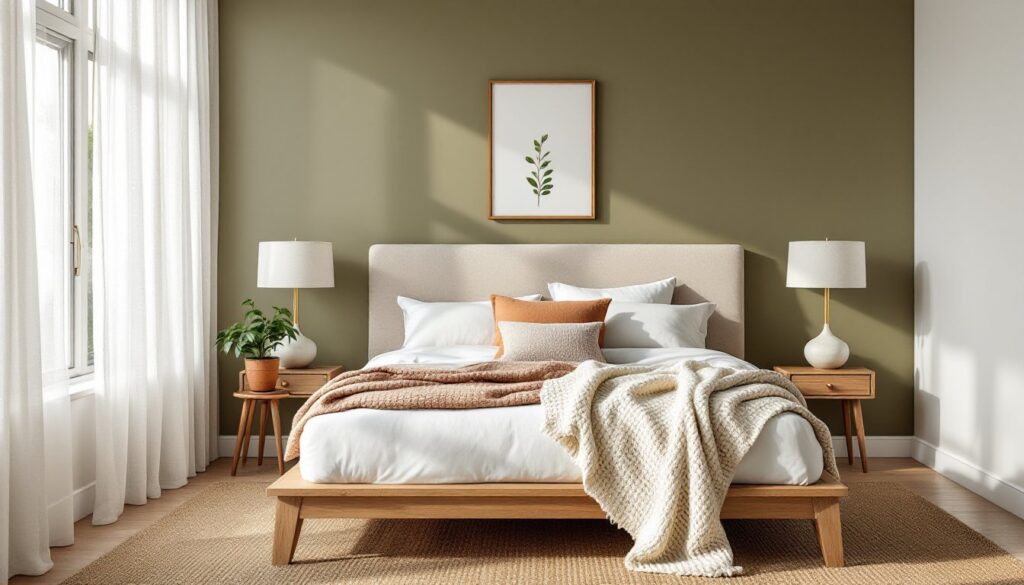
Olive green has quietly become one of the most versatile and grounding colors for bedroom design. It’s earthy without feeling rustic, sophisticated without feeling cold, and works equally well in modern, traditional, or eclectic spaces. Unlike trendy pastels or stark neutrals, olive green brings depth and warmth that helps a bedroom feel like an actual retreat. This guide walks through practical color pairing strategies, wall treatments, furniture selections, and lighting techniques to make olive green work in any bedroom, without turning it into a military surplus store or a dated 1970s throwback.
Key Takeaways
- Olive green bedroom designs reduce stress and promote relaxation due to their muted, warm undertones, making them ideal for a restful retreat space.
- Choose lighter olive greens for small rooms with limited light, mid-tone olives for versatility, and deep saturated olives only for larger bedrooms with ample natural light.
- Olive green pairs beautifully with warm whites, terracotta, navy, and brass accents, while avoiding cool silvers and bright saturated colors for a cohesive look.
- Paint an accent wall behind the bed for maximum impact at minimal cost, or use peel-and-stick wallpaper and board-and-batten paneling as renter-friendly alternatives.
- Layer warm white lighting (2700K–3000K) with multiple light sources and add texture through natural materials like linen, jute, and wood to enhance olive green’s sophisticated warmth.
- Complement olive green bedroom walls with warm-toned wood furniture, neutral upholstered headboards, and layered textiles in dusty pink, terracotta, or navy for depth and comfort.
Why Olive Green Is the Perfect Bedroom Color in 2026
Olive green sits at the intersection of color psychology and practical design. Research shows green tones reduce stress and promote relaxation, key for a space meant for sleep. Unlike bright or cool greens, olive’s muted, warm undertones create coziness without overwhelming the senses.
From a design standpoint, olive green is incredibly forgiving. It hides imperfections better than white or light gray, doesn’t show dirt as quickly as cream, and pairs well with both warm and cool accent colors. It also works across lighting conditions, north-facing rooms benefit from its warmth, while south-facing spaces can handle deeper, more saturated olive tones without feeling heavy.
In 2026, the shift toward biophilic design (bringing nature indoors) and away from stark minimalism has made olive green a go-to. It anchors a room without requiring a complete overhaul of existing furniture or flooring. Homeowners looking to update a bedroom without ripping out carpet or repainting trim find olive works with oak, walnut, brass, black metal, and even existing beige or gray palettes.
Choosing the Right Shade of Olive Green for Your Bedroom
Not all olive greens are created equal. The wrong shade can read as muddy brown or sickly yellow, depending on the room’s natural light and existing finishes.
Lighter olive greens (with more gray or beige in the mix) work well in smaller bedrooms or rooms with limited natural light. These shades, sometimes called “sage olive” or “celadon”, reflect more light and keep the space from feeling closed in. They pair easily with white trim and light wood floors.
Mid-tone olive greens are the most versatile. They provide enough saturation to create visual interest but won’t dominate the room. These shades work in most bedroom sizes and orientations. Look for colors with balanced yellow and gray undertones to avoid skewing too warm or too cool.
Deep, saturated olive greens (often with more black or charcoal) create drama and intimacy. These work best in larger bedrooms with high ceilings or ample natural light. They’re ideal for accent walls or spaces where a cocooning effect is desired. Be aware that deep olive can make a small, poorly lit room feel cramped.
Always test paint samples on at least two walls, one that gets direct light and one that doesn’t. Observe them at different times of day. Olive green shifts significantly between morning, midday, and evening light.
Olive Green Bedroom Color Schemes That Work
Olive green plays well with a surprisingly wide range of colors. The key is balancing undertones and saturation levels.
Olive and white is a clean, classic combination. Use warm whites (with cream or beige undertones) rather than stark or blue-toned whites, which can create a jarring contrast. White trim, bedding, and curtains let olive walls breathe without feeling heavy.
Olive and terracotta brings warmth and earthiness. Terracotta accents, throw pillows, a ceramic lamp, a woven rug, complement olive’s yellow undertones and add a Mediterranean or southwestern feel without going full theme.
Olive and blush or dusty pink softens the green and adds a subtle feminine touch without feeling overly sweet. This works particularly well in bedrooms with vintage or romantic styling.
Olive and navy or charcoal creates a moody, sophisticated palette. Deep blues and grays ground the space and work well in modern or masculine bedroom designs. Use lighter olive tones if going this route to avoid a cave-like effect.
Olive and brass or gold accents add warmth and a touch of glamour. Hardware, light fixtures, and picture frames in warm metallics enhance olive’s richness without competing with it.
Avoid pairing olive with cool silvers or bright, saturated colors (electric blue, hot pink) unless deliberately going for an eclectic look. Olive thrives in palettes that feel cohesive and grounded.
Styling an Olive Green Accent Wall
An accent wall is the lowest-commitment way to bring olive green into a bedroom. It delivers impact without the cost or labor of painting the entire room.
The wall behind the bed is the most common choice for an accent wall, it frames the headboard and creates a natural focal point. If the bed wall has windows or awkward breaks, consider the wall opposite the bed or a side wall with uninterrupted space.
Prep and Paint Application
Proper surface prep is critical. Fill nail holes with spackle, sand smooth with 120-grit sandpaper, and wipe down with a damp cloth. Prime the wall if painting over a darker color or fresh drywall. Use a high-quality primer (such as a stain-blocking primer if covering bold colors) to ensure even coverage.
Apply two coats of paint using a roller with a 3/8-inch nap for smooth walls or 1/2-inch nap for textured surfaces. Cut in edges with a 2-inch angled brush for clean lines along trim and ceilings. Most quality paints cover 350–400 square feet per gallon, so a typical accent wall (10 feet wide by 8 feet tall = 80 square feet) uses less than a quart per coat.
Accent Wall Alternatives
For renters or commitment-phobes, consider peel-and-stick wallpaper in olive green. Options range from solid colors to botanical prints and geometric patterns. Installation is straightforward, measure, cut, peel, and smooth from top to bottom, and removal is damage-free.
Board-and-batten paneling painted olive green adds architectural interest and texture. Install vertical 1×2 or 1×3 furring strips over the wall at 12- to 16-inch intervals, paint the entire assembly, and the result feels custom and high-end.
Furniture and Decor Ideas for Olive Green Bedrooms
Furniture choices can either enhance or clash with olive green walls. The goal is to create contrast and balance without fighting the color.
Wood furniture in warm tones, walnut, oak, teak, complements olive beautifully. The natural grain adds texture, and the warm undertones harmonize with olive’s earthy base. Avoid overly orange or red-toned woods (like cherry), which can clash.
Upholstered headboards in neutral linen, oatmeal, or light gray provide a soft contrast against olive walls. Tufted or channeled designs add dimension. A velvet headboard in cream or taupe brings a touch of luxury without overwhelming the space.
Metal bed frames in brass, matte black, or oil-rubbed bronze work well. Brass adds warmth and a bit of shine: black creates crisp, modern contrast. Avoid chrome or shiny silver, which can feel cold against olive.
Bedding and Textiles
Layering textiles adds depth and comfort. Start with white or cream sheets, then add a duvet or quilt in a complementary color, dusty pink, terracotta, navy, or even a deeper olive for a tonal look. Throw pillows in mixed textures (linen, velvet, cotton) and patterns (stripes, florals, geometric) keep the bed from feeling flat.
Area rugs anchor the room. A jute or sisal rug adds organic texture and works with olive’s natural vibe. Patterned rugs in muted tones (Persian, Turkish, or modern geometric) can tie together multiple accent colors.
Art and Accessories
Framed botanical prints, abstract art with warm tones, or black-and-white photography all work well on olive walls. Use wood or brass frames to maintain warmth. Avoid overly bright or neon art, which can look jarring.
Ceramic or terracotta planters with live plants (pothos, snake plant, or fiddle-leaf fig) enhance the natural feel. Plants thrive in bedrooms and reinforce the biophilic theme olive green supports.
Lighting and Texture Tips to Enhance Olive Green Tones
Lighting can make or break an olive green bedroom. The wrong temperature or placement will turn a sophisticated green into a murky mess.
Choosing the Right Light Temperature
Olive green looks best under warm white light (2700K–3000K). Cool or daylight bulbs (above 4000K) can make olive appear drab or yellowish. Use LED bulbs in warm white for overhead fixtures, bedside lamps, and any accent lighting.
Dimmer switches are invaluable in a bedroom. They allow adjustment of light intensity throughout the day and evening, letting the olive green shift naturally from energizing to calming.
Layering Light Sources
Relying solely on overhead lighting flattens the room. Layer multiple light sources for depth:
- Overhead fixture (ceiling-mounted or semi-flush) for general illumination
- Bedside lamps or wall-mounted sconces for task lighting and ambiance
- Accent lighting like LED strips behind a headboard or under floating shelves to highlight texture
Adding Texture
Texture prevents an olive green room from feeling one-dimensional. Mix materials and finishes throughout the space:
- Linen curtains soften windows and filter light gently
- Woven baskets for storage add organic texture
- Textured throw blankets (chunky knit, waffle weave, faux fur) layer over bedding
- Wood or rattan furniture introduces natural grain and warmth
- Matte paint finishes on walls (eggshell or matte) absorb light softly, while satin or semi-gloss on trim adds subtle contrast
Avoid overloading the room with one texture type. Balance rough (jute, wood) with soft (velvet, linen) and matte with slight sheen for a curated, intentional look.
Conclusion
Olive green offers a rare combination of versatility, warmth, and timelessness that few bedroom colors can match. Whether applied as a full-room treatment or a single accent wall, it pairs effortlessly with natural materials, warm metals, and a wide range of complementary colors. The key is choosing the right shade for the room’s light, prepping surfaces properly, and layering texture and lighting to bring out olive’s best qualities. Done right, an olive green bedroom feels grounded, restful, and far more interesting than another coat of gray.