
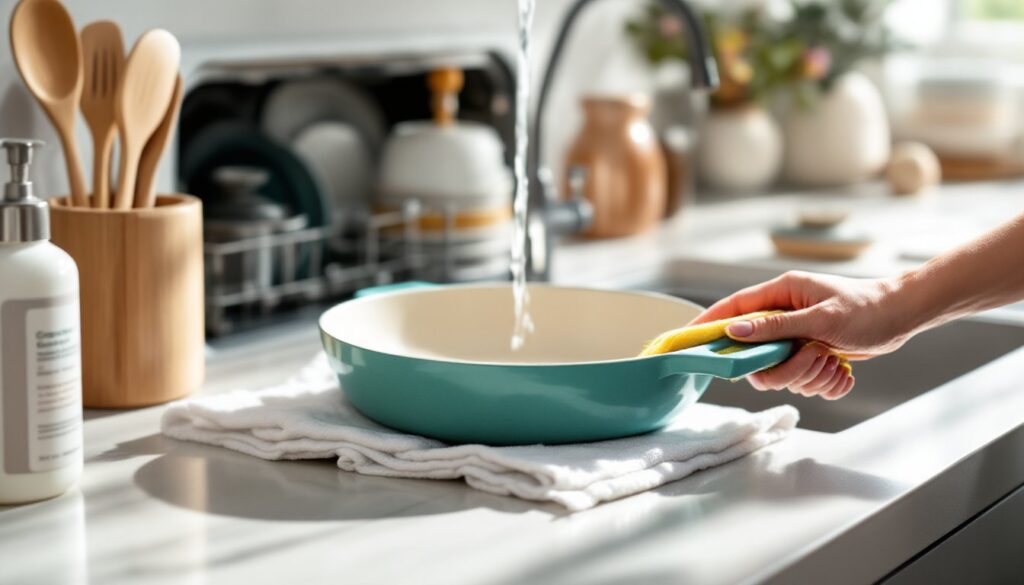
GreenPan has built a reputation for ceramic nonstick cookware that’s free from PFAS, PFOA, lead, and cadmium. But when it comes to cleanup, many home cooks wonder whether tossing these pans into the dishwasher will wreck the nonstick coating or void the warranty. The short answer: most GreenPan lines are technically dishwasher safe, but hand washing extends their lifespan significantly. This guide covers official manufacturer guidelines, how dishwashers affect ceramic coatings, and practical care tips to keep GreenPan cookware performing like new for years.
Key Takeaways
- Most current GreenPan lines are dishwasher safe according to official 2026 guidelines, but hand washing is recommended to preserve the ceramic nonstick coating and extend lifespan to 3–5 years.
- Dishwasher detergents and high heat gradually erode the micro-textured ceramic surface, reducing nonstick performance even though the coating won’t be damaged beyond use.
- Hand wash GreenPan cookware with warm water, mild dish soap, and a soft sponge to protect the Thermolon coating; avoid metal utensils, cooking spray, and abrasive cleaners that compromise the nonstick layer.
- Older GreenPan models (pre-2020) may have less durable coatings and explicitly require hand washing, so always check your pan’s care tag or manual for specific guidance.
- Seasonal light conditioning with vegetable oil, proper storage with pan protectors, and avoiding thermal shock will maximize your GreenPan cookware’s nonstick performance.
What Makes GreenPan Cookware Unique?
GreenPan pioneered Thermolon™ ceramic nonstick coating in 2007, marketed as a healthier alternative to traditional PTFE (Teflon) pans. The coating is derived from sand (silicon dioxide) and applied in a sol-gel process that produces fewer CO₂ emissions than conventional nonstick manufacturing.
Unlike PTFE, Thermolon won’t release toxic fumes if the pan accidentally overheats beyond 500°F. The ceramic surface bonds to the aluminum or hard-anodized aluminum base through a curing process, creating a slick, somewhat porous layer that resists sticking without chemical additives.
GreenPan offers multiple collections, Valencia Pro, Reserve, and others, with varying coating formulations. Some feature reinforced layers (diamond-infused coatings in premium lines) for added durability. The base construction also varies: standard aluminum heats quickly but dents easily, while hard-anodized or stainless-clad versions resist warping and work on induction cooktops.
This construction matters for dishwasher safety. Thinner aluminum pans may warp slightly under high dishwasher heat, while reinforced coatings tolerate detergent exposure better than entry-level lines.
Official GreenPan Dishwasher Safety Guidelines
According to GreenPan’s 2026 product documentation, most current collections are dishwasher safe, including Valencia Pro, Reserve, and Paris Pro lines. The manufacturer states the Thermolon coating can withstand dishwasher detergents and high-temperature rinse cycles without degrading.
But, the fine print includes caveats. GreenPan recommends hand washing to preserve the nonstick performance and exterior finish. Dishwasher detergents are alkaline and abrasive by design, they strip grease and baked-on food, which also means they gradually erode microscopic surface texture on ceramic coatings.
Warranty terms don’t explicitly void coverage for dishwasher use, but they exclude damage from “improper care.” If a pan’s nonstick performance degrades and the company determines dishwasher exposure contributed, coverage could be denied.
Older GreenPan lines (pre-2020) may have less durable coatings. Check the care tag or manual that came with the cookware. If it explicitly says “hand wash only,” trust that guidance, earlier Thermolon formulations were more prone to hazing and loss of nonstick properties after repeated dishwasher cycles.
Bottom line: dishwasher safe doesn’t always mean dishwasher smart.
Why Hand Washing Is Still Recommended
Even though GreenPan allows dishwasher use, hand washing delivers longer nonstick life and better pan appearance. Dishwashers subject cookware to harsh conditions that accelerate wear, even on durable finishes.
Commercial dishwasher detergents contain enzymes, bleach, and chelating agents designed to break down proteins and fats. These compounds etch smooth surfaces over time. Ceramic nonstick relies on a micro-textured surface to reduce sticking: as detergent wears that texture down, food begins adhering more.
High heat is another issue. Dishwasher rinse cycles often hit 140–160°F, and drying cycles can spike higher. Rapid heating and cooling cause expansion and contraction in the aluminum base, which can lead to micro-warping. On pans with exterior enamel or painted finishes, dishwasher heat may cause fading or discoloration.
Water quality also matters. Hard water leaves mineral deposits that appear as white, cloudy film on dark-colored pans. Dishwasher rinse aids reduce spotting on glassware but don’t fully protect cookware.
How Dishwashers Affect Nonstick Ceramic Coatings
Ceramic coatings are inherently porous at the microscopic level, which contributes to their nonstick properties. When exposed to alkaline detergent and high heat repeatedly, those pores can absorb residue or become enlarged, reducing slickness.
Dishwasher racks can also cause physical damage. Pans jostled against other items may develop scratches on the cooking surface or rim. Even small abrasions compromise nonstick performance because they create anchor points for food.
The exterior finish degrades faster in dishwashers. Colored or brushed stainless handles may discolor, and silicone grips can become brittle with repeated exposure to harsh detergents. This doesn’t affect cooking performance but shortens the pan’s cosmetic lifespan.
Best Practices for Cleaning Your GreenPan
Proper hand washing takes less than two minutes and preserves the nonstick coating. Here’s the process:
- Let the pan cool completely before washing. Plunging a hot pan into cold water causes thermal shock, warping the base and potentially cracking the coating.
- Use warm water, a soft sponge, and a mild dish soap (Dawn, Seventh Generation, or similar). Avoid antibacterial or degreasing formulas with harsh surfactants.
- For stuck-on food, fill the pan with warm water and a few drops of soap, then let it soak for 10–15 minutes. Most residue will release without scrubbing.
- Gently scrub with the soft side of the sponge in circular motions. Don’t use steel wool, scouring pads, or abrasive cleaners like Bar Keeper’s Friend on the nonstick interior.
- Rinse thoroughly under warm running water. Soap residue left on the surface can carbonize during the next use, creating dark spots.
- Dry immediately with a soft towel. Air-drying promotes water spots, especially in areas with hard water.
For stubborn stains or carbonized oil (the brown film that builds up over time), make a paste with baking soda and water. Apply to the cool pan, let sit for 15 minutes, then scrub gently with a non-abrasive sponge. Rinse and dry.
Never use cooking spray on ceramic nonstick. Aerosolized oils contain lecithin and propellants that build up into a sticky, varnish-like layer that dishwashers and hand washing can’t fully remove.
Common Mistakes That Damage Green Pans
Even dishwasher-safe pans fail prematurely if users make these errors:
- Using metal utensils: Ceramic coatings scratch more easily than PTFE. Stick with silicone, wood, or nylon tools. A single scrape from a fork or whisk can compromise the nonstick layer.
- High heat cooking: GreenPan can handle higher temps than Teflon (up to 600°F for some lines), but ceramic nonstick performs best at low to medium heat. Overheating causes the coating to dry out and lose effectiveness.
- Skipping oil or butter: Ceramic nonstick isn’t truly “fat-free” cooking. A small amount of oil or butter prevents hot spots from bonding food to the surface and seasons the pan slightly.
- Stacking without protection: Storing pans nested inside each other scrapes the coating. Use pan protectors (felt or silicone liners) or hang them if possible.
- Using aerosol cooking spray: As mentioned, spray oils leave residue that becomes nearly impossible to remove and ruins nonstick performance.
- Thermal shock: Moving a hot pan to a cold surface or running cold water over it causes warping, especially on thinner aluminum models.
Another overlooked issue: preheating an empty pan for too long. Ceramic coatings can withstand heat, but prolonged dry heating above 500°F may cause discoloration and reduce nonstick properties.
How to Extend the Life of Your GreenPan Cookware
With proper care, GreenPan cookware should deliver 3–5 years of reliable nonstick performance, sometimes longer for premium hard-anodized lines.
Season the pan occasionally. Unlike cast iron, ceramic nonstick doesn’t require seasoning, but a light conditioning every few months helps. Wipe the interior with a thin layer of vegetable or canola oil using a paper towel, then heat the pan over low for 1–2 minutes. Let it cool, then wipe out excess. This fills microscopic pores and refreshes the slick surface.
Store carefully. Hang pans on a pot rack or use pan protectors if stacking. Avoid cramming them into crowded cabinets where they’ll rub against cast iron or stainless pots.
Rotate cookware. Don’t use the same 10-inch skillet daily. Rotating between two or three pans spreads the wear and prevents premature coating breakdown.
Inspect regularly. If food starts sticking in one spot or the coating looks flaky or discolored, it’s time to retire the pan. Damaged ceramic coatings are food-safe (they’re inert minerals), but the pan won’t perform well.
Use the right burner size. On gas or electric stoves, match the burner diameter to the pan base. Flames licking up the sides or coil elements wider than the pan cause uneven heating and warp the base.
For hard-anodized or stainless-exterior GreenPan models, clean the outside with a stainless cleaner or baking soda paste to maintain appearance. Burnt-on grease on the exterior doesn’t affect cooking but can transfer odors.